
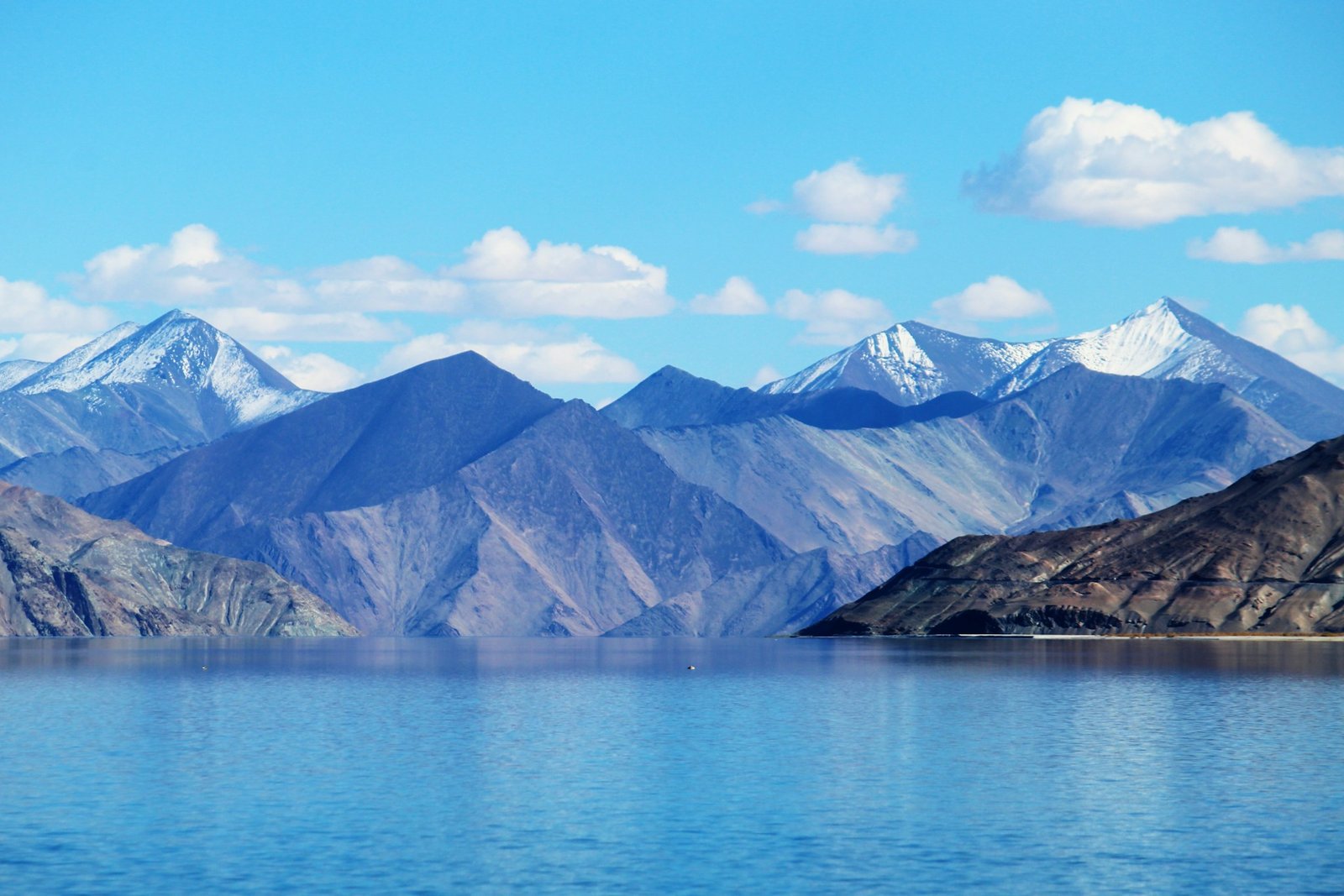
Ladakh spends most of the year looking like the surface of another planet. Bare brown mountains, a sky so thin and blue it looks over saturated, and valleys so dry that the whole region is officially classified as a high altitude cold desert. Then, for a handful of weeks in the middle of summer, something happens that catches most first time visitors off guard. The valley floor along the Indus and Shyok rivers turns green.
A desert that only floods once a year, on purpose
Ladakh sits behind the Himalayan wall, in a rain shadow so complete that the region receives less annual rainfall than parts of the Thar Desert. The monsoon clouds that drench the rest of India simply cannot get over the mountains. What keeps Ladakh alive instead is snowmelt, and by August, glacial water feeding the Indus and its tributaries has done enough work on the valley floor that the barley fields, poplar groves, and apricot orchards around villages like Nubra and Diskit turn a green that looks almost out of place against the bare peaks behind them. It lasts a matter of weeks. By September the gold starts creeping back in.
This is also the one stretch of the year when the region’s most famous routes are fully open and fully accessible. Nubra Valley, Pangong Lake, and the more remote Tso Moriri are all reachable, the passes are clear, and unlike June, when the roads have only just opened and every hotel in Leh is booked solid, August sees noticeably thinner crowds while the weather stays exactly as good.
Where the water turns colours nobody quite believes
Pangong Lake sits at 4,225 metres, stretching more than 130 kilometres from Ladakh into Tibet, and its water genuinely does shift through blues and greens over the course of a single day depending on the light and the angle you are looking from. It became a household name in India largely because of a Bollywood film shot on its shores, and it has not gotten any less crowded since, but arriving early in the morning before the tour convoys from Leh roll in still buys a version of the lake that feels closer to what visitors saw twenty years ago.
Nubra Valley, reached over Khardung La, one of the highest motorable passes in the world, offers something Pangong does not: double humped Bactrian camels, descendants of animals used on the old Silk Road trade routes through Central Asia, grazing on sand dunes at Hunder against a backdrop of snow peaks. It is a strange, striking combination that photographs do not quite prepare you for, cold desert mountains and warm sand dunes in the same frame.
Tso Moriri, further southeast and considerably less visited than Pangong, rewards the extra effort with a stillness the more famous lake has largely lost, along with a genuine chance of spotting the black necked crane, a bird considered sacred in Ladakhi Buddhist culture and increasingly rare across its Himalayan range.
Leh itself, and the palace above it
Leh Palace, a nine storey structure built in the 17th century and modelled loosely on the more famous Potala Palace in Lhasa, sits above the old town and offers views across the Indus valley that make the short, steep climb worth it, particularly in the hour before sunset when the light turns the surrounding mountains a deep red gold. The old town below it, a warren of narrow lanes, Buddhist shrines, and small workshops, rewards slow wandering more than any guided tour.
Shanti Stupa, a white domed Buddhist monument built in 1991 by a Japanese Buddhist organisation working with local Ladakhi monks, sits on a hilltop across the valley and has become the place locals and visitors alike go for sunrise, the whole Leh valley spread out below in soft early light.
What the altitude actually demands of you
Leh sits at roughly 3,500 metres, and altitude sickness here is common enough that ignoring it is a genuine mistake rather than an inconvenience. The standard advice, given by every operator and every doctor who has spent time in the region, is to do nothing but rest for the first 24 to 48 hours after arrival, particularly if flying in directly from sea level, which most visitors do. Push straight into sightseeing on day one and there is a real chance the trip gets cut short by a headache that will not go away.
An Inner Line Permit is required for Nubra, Pangong, and Tso Moriri, since all three sit close to sensitive border areas, though the process has become considerably smoother in recent years and most hotels or local travel agents in Leh can arrange it within a day.
The food nobody expects
Ladakhi cuisine draws heavily on Tibetan influence, thukpa, a hearty noodle soup built to survive cold mountain nights, and momos, the dumplings that have since spread across all of India but taste distinctly different at altitude, made with local ingredients and often filled with yak meat or local greens rather than the fillings found in the plains. Apricots, grown across the region and dried on rooftops in late summer, show up in everything from jam to a mildly alcoholic local brew.
Getting there, and getting around
Leh has a well connected airport, though flights are weather dependent and delays during monsoon months elsewhere in India can ripple into Ladakh’s schedule even though the region itself stays dry. The road routes, from Manali over Rohtang and Baralacha La, or from Srinagar over Zoji La, are both spectacular and both entirely seasonal, generally open only from late May or June through October depending on snowfall.
Ladakh does not reward a rushed itinerary. The altitude alone forces a slower pace than most Indian holidays, and the landscape, once you stop trying to see everything in four days, turns out to be the entire point.