
Most fort cities in India have been museum pieces for centuries, their ramparts preserved behind ticket counters while the actual living city moved elsewhere long ago. Jaisalmer never got that memo. Roughly three thousand people still live, cook, trade, and sleep inside the walls of Jaisalmer Fort, making it one of the very few fortified cities anywhere in the world that remains genuinely inhabited rather than merely displayed, and that single fact changes almost everything about visiting it.
A fort built from sand, that still glows like it
Built in 1156 by the Rajput ruler Rawal Jaisal, the fort is constructed almost entirely from local golden sandstone, and it is this stone, not any trick of restoration, that gives Jaisalmer its nickname, the Golden City. At sunset, when the low desert light hits the ramparts directly, the entire fort turns a shade of amber gold that has made it one of the most photographed skylines in Rajasthan, and unlike a staged monument, the glow falls just as evenly on the havelis where families are still cooking dinner as it does on the temples and palace inside.
Inside the walls, narrow lanes wind between intricately carved havelis, several of which are still private residences, alongside a working Jain temple complex dating back to the 12th and 15th centuries, its interior carved with a density of detail that takes a genuinely long visit to properly absorb. Patwon Ki Haveli, a cluster of five havelis built by a wealthy merchant family in the early 19th century, remains the finest example of the carved sandstone architecture the city is known for, its facade so ornately worked it looks closer to lace than stone from a distance.
The desert that starts where the city ends
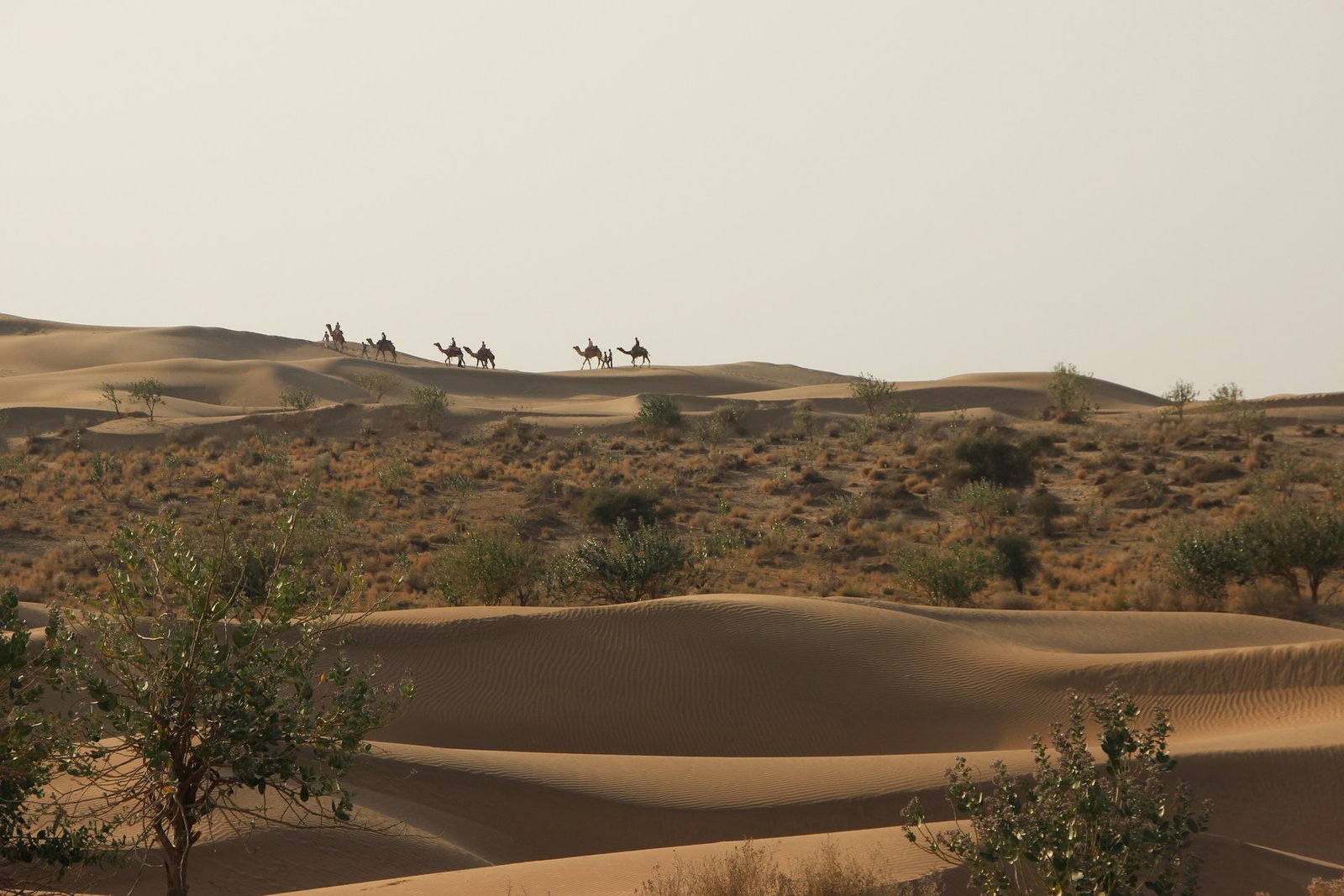
Forty kilometres outside Jaisalmer, the Sam Sand Dunes mark the point where Rajasthan stops being a state with towns and starts being the Thar Desert in the fullest sense, a three to five kilometre stretch of genuinely soft, rolling sand with almost no vegetation, closer in feel to the Sahara than to anything else in India. This is where most visitors spend their one unmissable evening in Jaisalmer, and the timing matters more than almost anything else about the visit.
Arrive by camel or jeep between five and seven in the evening, and the dunes deliver a sunset that has earned every bit of its reputation, low golden light raking across the sand ridges as temperatures finally drop from punishing to pleasant. Desert camps set up along the edge of the dunes offer overnight stays in swiss tents or traditional mud cottages, and after dark, most host Rajasthani folk music and dance performances around a fire, followed by a dinner that leans hard into the region’s distinct desert cuisine, heavier on lentils, millet, and preserved vegetables than the rest of Rajasthan, developed over centuries by a population that had to cook with what a genuinely arid landscape could actually provide.
The quieter version, for those who want the dunes without the crowds
Sam has become popular enough that peak evening hours now draw a genuine crowd of jeeps and camel trains converging on the same sunset point. Khuri, a smaller set of dunes roughly forty kilometres in the opposite direction from the city, offers a visibly quieter version of the same experience, still golden, still vast, with a fraction of the visitors and a handful of desert camps that feel considerably more intimate after dark.
For anyone willing to trade a few hours of sleep for genuine solitude, an early morning camel ride at Sam between four thirty and six, timed for sunrise rather than sunset, delivers an almost entirely empty desert, cool air, and a version of the dunes that the evening crowds never see at all.
A village abandoned overnight, and still empty
Kuldhara, roughly twenty kilometres from Jaisalmer, is a fully preserved ghost village, one of eighty four settlements local legend says were abandoned overnight by the Paliwal Brahmin community in the early 19th century, fleeing the unwanted attention of the region’s tax minister. Whatever the precise historical truth behind the exodus, the result today is a genuinely eerie, completely empty stone village frozen at the exact moment its residents left, and walking its abandoned lanes at dusk delivers a very different kind of desert atmosphere than the dunes.
Getting the timing right
October through March is unambiguously the season to visit, daytime temperatures settling into a comfortable range that makes both fort exploration and desert excursions genuinely pleasant rather than an endurance exercise. February brings the added pull of the Desert Festival, a three day celebration of Rajasthani culture staged against the dunes themselves, featuring camel races, folk performances, and a Mr Desert competition that has become one of the more distinctive small festivals in the state’s calendar. April through September pushes daytime temperatures well past 40 degrees and is, for all but the most heat tolerant travellers, worth avoiding entirely.
Getting there
Jaisalmer’s own airport connects to Delhi and a handful of other cities, though flight frequency is limited and seasonal. The railway station offers considerably more reliable year round access, well connected to Jodhpur, Jaipur, and Delhi, with the overnight train from Jodhpur remaining one of the more popular ways to arrive, timed to reach the golden walls of the fort just as the morning light hits them properly for the first time.