
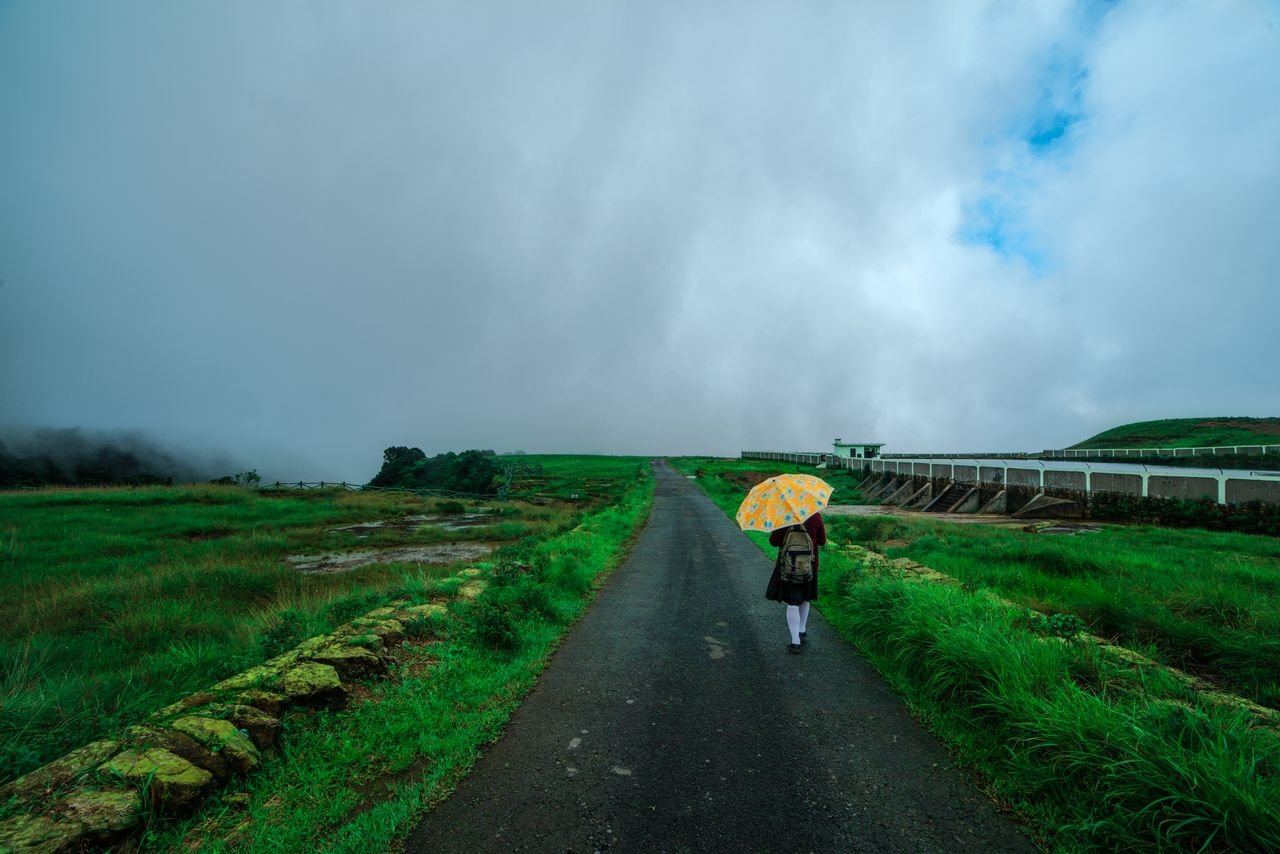
There is a stretch of hills in India’s northeast where the clouds do not float above you. They sit with you. They move through your room, settle on your tea, and blur the line between what is sky and what is land. This is Meghalaya, and the name itself, given in Sanskrit, means the abode of clouds. Few places on earth have ever been named so honestly.
Most travellers know Meghalaya for a single statistic, that it is home to the wettest place on the planet. For decades that title belonged to Cherrapunji, known by its original Khasi name Sohra. In recent decades, though, the nearby village of Mawsynram has quietly overtaken it, recording a higher average annual rainfall of close to 11,900 millimetres. To put that number in perspective, London receives about 600 millimetres in a year and Mumbai, a city Indians already consider drenched, gets a fraction of what falls on these hills.
Cherrapunji has not surrendered its legend, though. It still holds the all-time world records for the most rainfall in a single month and in a single year, figures set back in 1861 that have never been beaten. So the honest way to describe this corner of the Khasi Hills is simple. Whether you stand in Sohra or Mawsynram, you are standing in the rain capital of the world.
Why so much water falls here
The reason is geography doing something dramatic. Moisture gathers over the Bay of Bengal and travels north across the flat plains of Bangladesh. When those heavy, water-laden clouds reach the sudden wall of the Khasi Hills, they are forced to rise. As they climb, they cool, and as they cool, they release everything they are carrying. Meteorologists call this orographic lift. Standing under it during peak monsoon, you will simply call it unforgettable.
A curious detail the locals know well is that in Sohra, most of the rain falls in the morning. Two wind systems collide over these hills, and the result is that the heaviest downpours often come with the dawn. Plan your mornings for shelter and your afternoons for exploring, and the mountain will reward you.
The living root bridges
If you see one thing in Meghalaya, make it the living root bridges. These are not built. They are grown. For centuries the Khasi people have guided the roots of the Indian rubber tree across streams and rivers, training them over ten to fifteen years until they form a bridge strong enough to carry people. Unlike wood, which rots in this endless damp, these bridges only grow stronger with age. The oldest still in daily use are believed to be more than five hundred years old.
The most famous is the double-decker root bridge at Nongriat village, reached by a demanding trek of around 3,500 steps down into a gorge and back up. It is not an easy walk, and in the wet season the stone steps are slick, but travellers who make it consistently describe it as one of the finest things they have done anywhere in India, not just the northeast.
Waterfalls that fall forever
All that rain has to go somewhere, and where it goes is over the edge of the plateau in a cascade of waterfalls. Nohkalikai Falls, near Cherrapunji, is India’s tallest plunge waterfall, dropping in a single uninterrupted ribbon into a pool of startling blue-green below. During the monsoon it thunders. In the drier months it narrows to a silver thread. Both are worth the trip.
When to go
Here is the honest guidance most brochures will not give you. If you want to witness the rain in its full fury, come during the monsoon between June and August, but be ready for the trails to close and the views to vanish behind cloud for days. If you want waterfalls at full force with clear skies and comfortable weather, come in October and November, just after the monsoon has spent itself. For the root bridge treks specifically, the dry winter months of December to February give you the safest footing.
Meghalaya is not a place you visit to tick a box. It is a place you visit to feel small in the best possible way, to watch water shape a landscape and a people, and to understand that some of India’s greatest wonders were never advertised. They were simply grown, one root at a time, by people who learned to live with the rain rather than fight it.
This is exactly the kind of destination our members get in full, with the trek routes, the stays, and the timing worked out. That is what a TravelNode membership is for.