
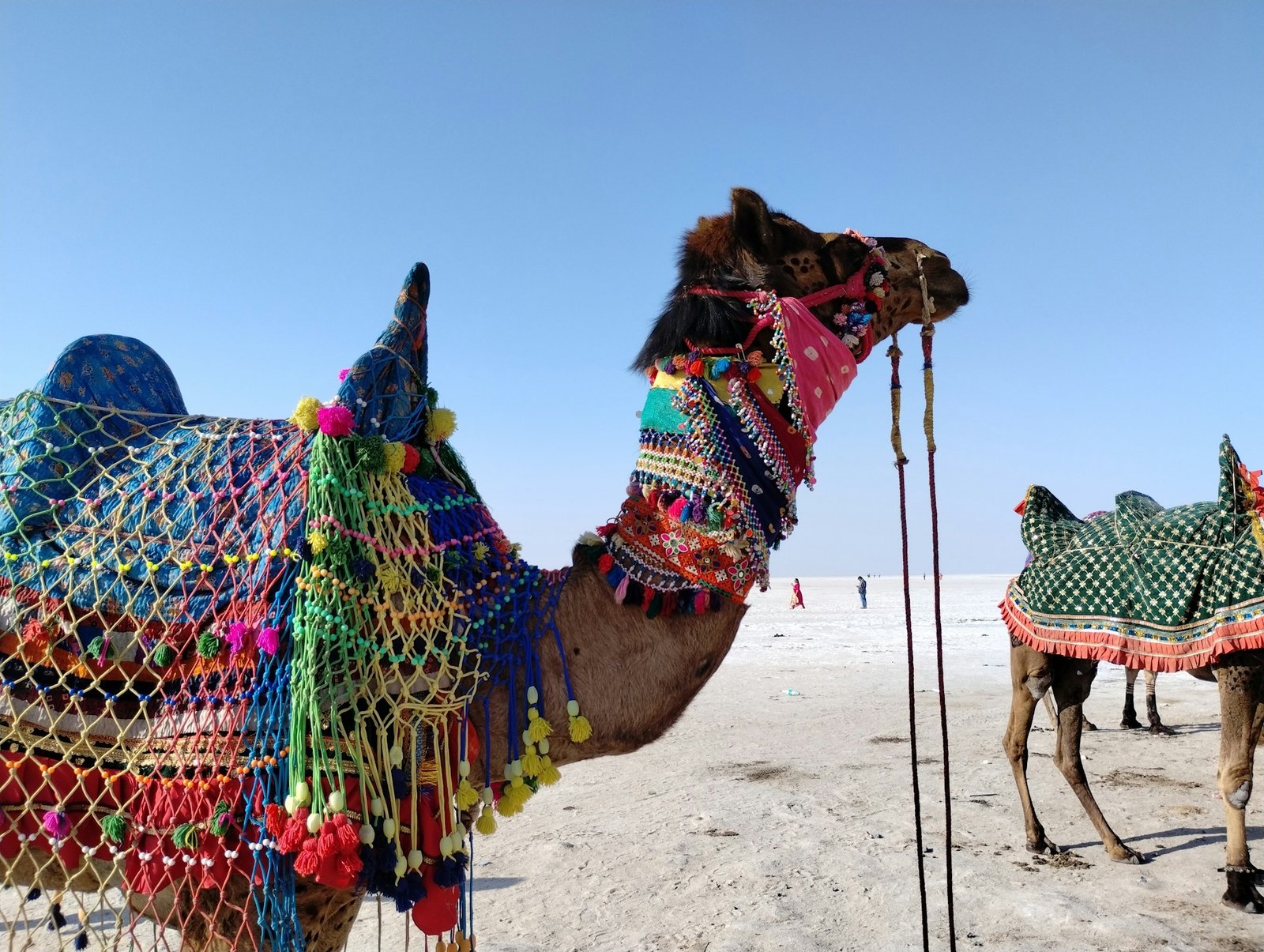
For eight months of the year, the Great Rann of Kutch is either underwater or unreachable. From roughly March through October, monsoon runoff and tidal flow from the Gulf of Kutch turn the region into a shallow inland sea, and for the hottest stretch before that, the exposed salt crust bakes under conditions that make travel genuinely unsafe. The white desert everyone has seen in photographs, the cracked, blinding, perfectly flat salt flat that looks unlike anywhere else in India, exists as a destination for a window of roughly four months a year, and almost nobody explains that plainly before they book.
The Great Rann covers approximately 7,500 square kilometres in Gujarat’s Kutch district, making it one of the largest salt marshes on earth, part of a wider salt marsh system that spans over 27,000 square kilometres across the India-Pakistan border when the smaller Little Rann to the southeast is included. The Rann was once part of the Arabian Sea, geologically abandoned as the coastline shifted over millennia, which is why the ground beneath the salt crust is, in effect, ancient seabed. During the monsoon, seawater and river runoff flood the entire basin. As the water evaporates through the winter, it leaves behind a crust of salt so pure and so flat that in bright conditions the horizon genuinely dissolves, no landmark, no shadow, no reference point except the sky.
That winter window, roughly November through February, is when Gujarat Tourism runs Rann Utsav, the White Desert Festival, at Dhordo village on the Rann’s edge. It is not a separate event from the landscape, it’s the infrastructure that makes visiting the landscape comfortable, a tented city with Kutchi folk music, local cuisine, and craft markets built around the region’s Rabari, Meghwal, and Mutwa communities, whose embroidery, leatherwork, and mirror work textiles are some of the most distinctive handicraft traditions in Gujarat. Full moon nights during the festival are the specific draw for photographers, moonlight on white salt producing a flat, almost lunar glow that doesn’t photograph the same way under any other conditions.
Beyond the white salt itself, the wider Kutch region holds the Little Rann of Kutch Wildlife Sanctuary, home to the Indian wild ass, a species found almost nowhere else in the world, along with flamingo colonies and a genuinely strange, semi-desert wetland ecosystem that shifts completely between seasons. Villages like Hodka and Nirona, a short drive from Dhordo, are where the region’s craft traditions are practised rather than performed, Rogan art in Nirona in particular is a 400 year old textile painting technique now practised by a single extended family, the Khatris, who are effectively the last custodians of it anywhere in the world.
The nearest airport is Bhuj, about 80 kilometres from Dhordo, with the nearest railhead closer still. Anyone planning around the white salt specifically should check the festival dates before booking rather than after, arriving even a few weeks outside the November to February window means arriving to find the destination itself, quite literally, underwater or gone.