
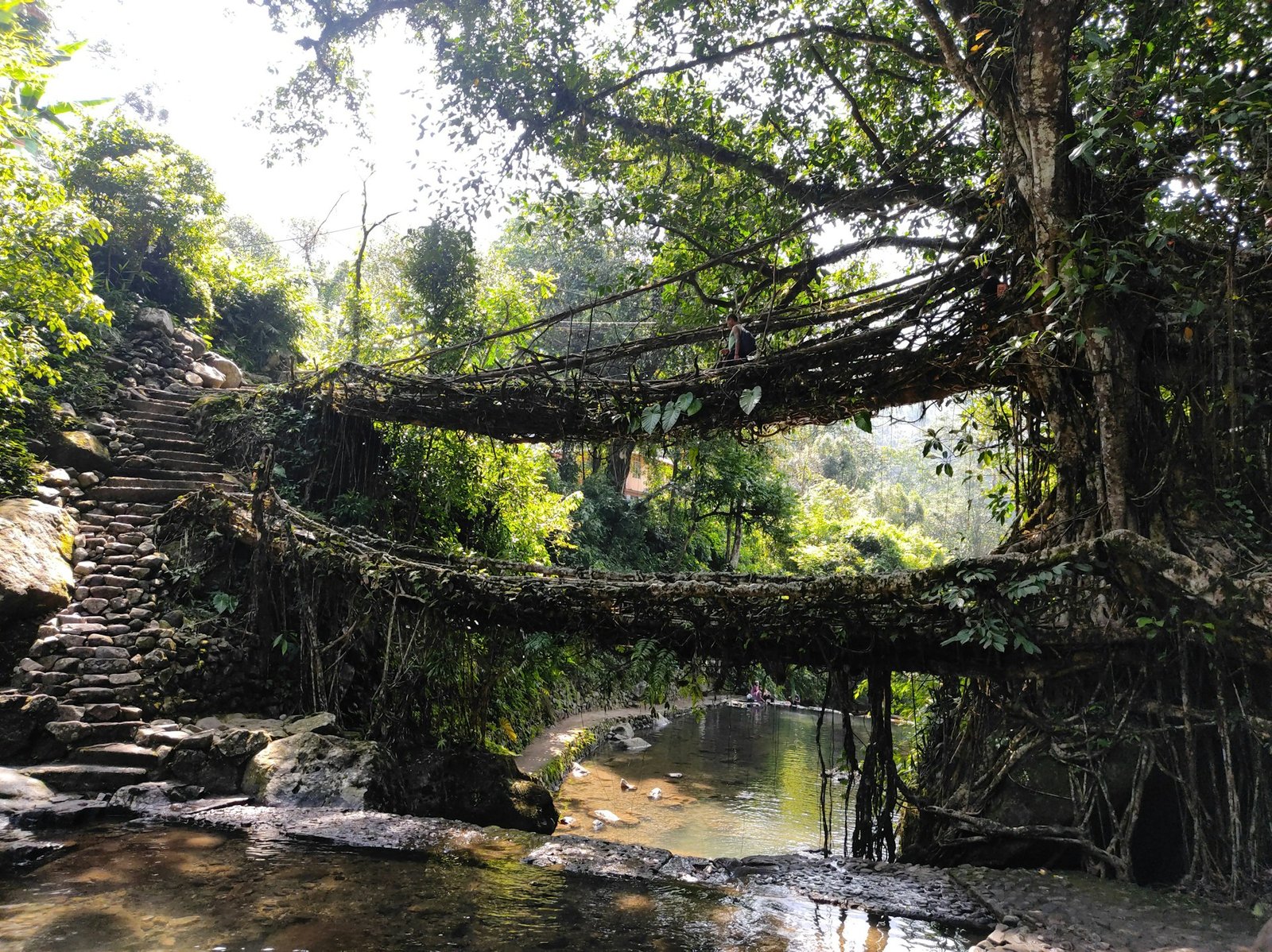
Most famous structures are built. Meghalaya’s are grown.
In the villages south of Shillong, the Khasi and Jaintia communities have spent generations guiding the aerial roots of the Ficus elastica, the Indian rubber fig, across streams and gorges. The roots are trained, coaxed along hollowed betel trunks, and left to thicken. Somewhere between fifteen and twenty five years later, the result is a bridge. It carries weight. It repairs itself. It gets stronger with age rather than weaker, which is the exact opposite of every other bridge humans make.
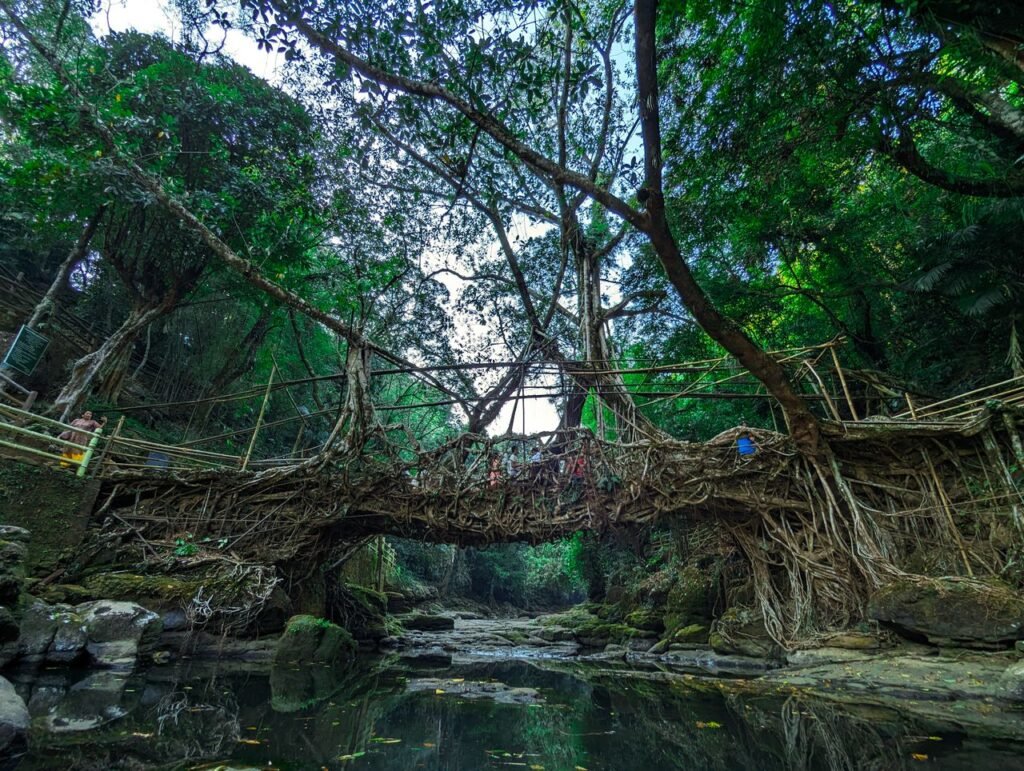
Nobody agrees on how many survive. A 2017 survey formally geo-located 75 of them. Other counts in circulation run to a hundred or more, and local listings go higher still, partly because bridges left uncared for decay back into the forest. What is settled is the recognition: in 2022, UNESCO added them to its tentative World Heritage list under the name Jingkieng Jri, the first formal step toward full inscription.
The one everybody comes for
The Umshiang double decker at Nongriat is the only known two tiered living root bridge in the world, two spans stacked over the same stream. It is also the reason most visitors to Meghalaya end up with sore legs.
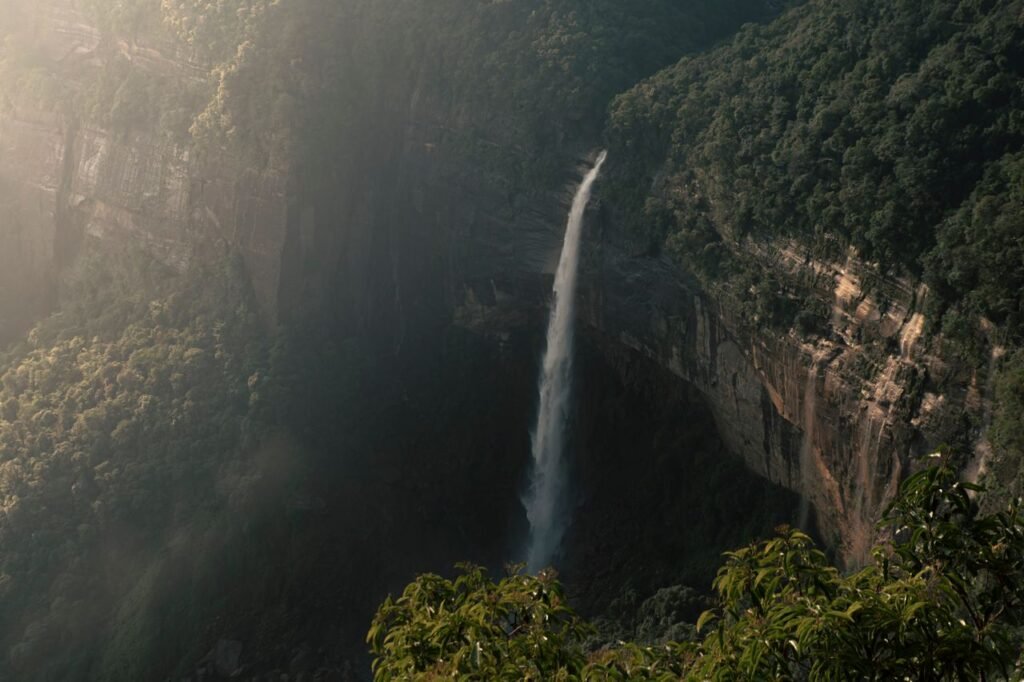
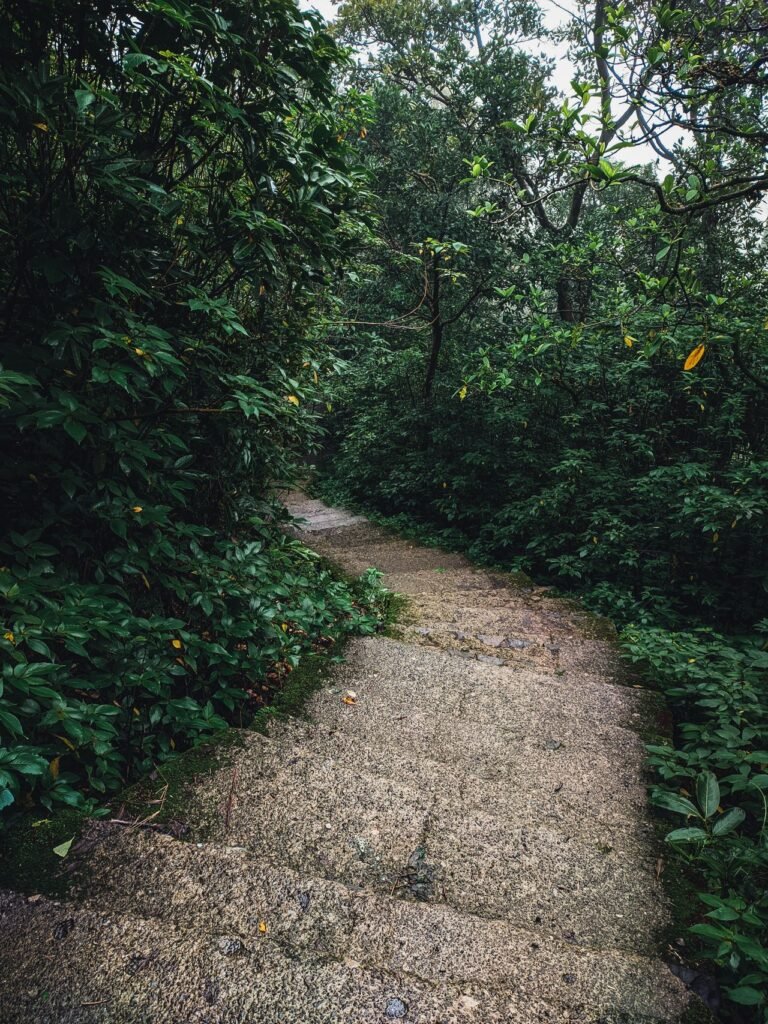
Getting there is not a viewpoint stop. The trail starts at Tyrna village, about 21 km from Cherrapunji, where the road ends and a stone stairway begins. From there it is roughly 3,500 hand laid steps down into the valley, a descent of around 730 metres over about 3 km, then the same 3,500 steps back up on the return. The stone stays damp through most of the year because Meghalaya’s humidity does not let it dry, so grip matters more than fitness.
Plan a full day. Start early, both to beat the heat and to leave margin for the climb back, which is genuinely harder than the descent suggests.
Worth going past the bridge
Most day trippers turn around at Nongriat. If you have the legs, another ninety minutes or so beyond it brings you to Rainbow Falls, where the pools run a startling turquoise on a clear day. Staying overnight in one of Nongriat’s small guesthouses makes this far more manageable than trying to fit everything into one descent.
Elsewhere in the region, the Rangthylliang bridge near Cherrapunji is considered the longest at over 50 metres, and there is an accessible bridge at Riwai near Mawlynnong that requires no trek at all, useful if someone in the group cannot handle the stairs.
The honest caveat
Tourism has taken a visible toll on the double decker. The bridge’s health has degraded under foot traffic, and a replica has been built at Nongriat partly to demonstrate the craft without loading the original further. Signboards at the site now carry visitor rules. Follow them. Stay on the structure, do not hang off the roots, and keep group sizes sensible.
When to go: October to April. The monsoon here is among the heaviest on earth and turns the stairways treacherous.
Base yourself: Cherrapunji, also called Sohra, for road access, or Nongriat itself if you want the valley at dawn.
Getting there: Shillong to Tyrna is around 65 km, roughly 2.5 to 3 hours by road.