
Eight of the world’s fourteen highest peaks sit inside Nepal, and an Indian passport holder can walk into the country without a visa. There is no other place on earth where that combination exists. Kathmandu is under two hours from Delhi, the rupee is broadly accepted, and Hindi will carry you through most conversations. For a country this dramatic, Nepal asks remarkably little of an Indian traveller.
What it does ask for is time. Nepal rewards slowness, and the trips that disappoint are almost always the ones compressed into a long weekend.
Kathmandu
The valley holds seven UNESCO World Heritage Sites, which is an unusual density for a city of this size. Kathmandu Durbar Square, Patan and Bhaktapur are the three that matter most, and Bhaktapur in particular rewards a full unhurried day. Its medieval core is largely free of traffic, and the pottery square in the late afternoon is one of the better hours you will spend in the country.
Boudhanath, the great white stupa in the east of the city, is at its best at dusk when the butter lamps are lit and the evening kora begins. Pashupatinath sits nearby on the Bagmati river and is among the most significant Shiva temples anywhere.
Pokhara
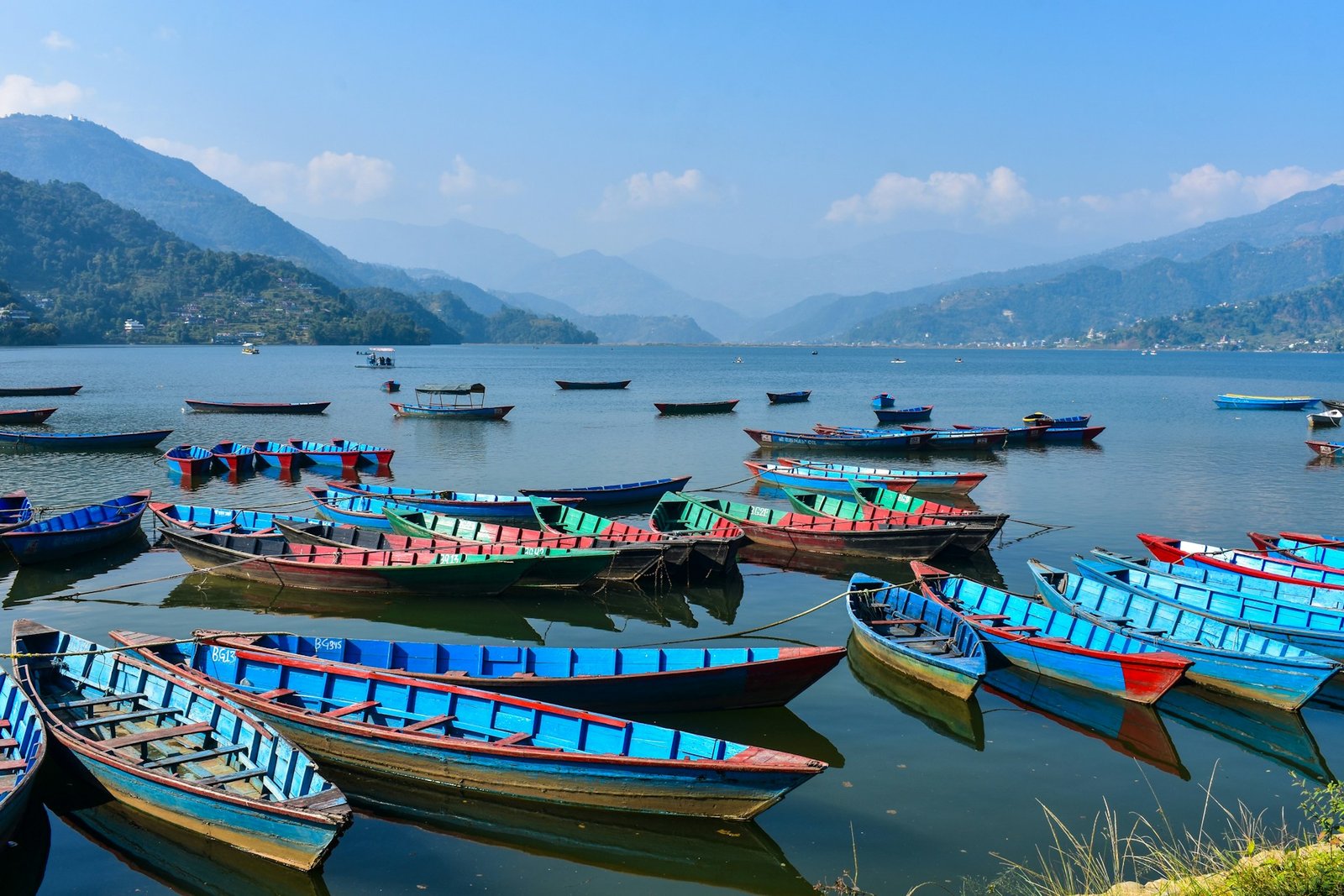
Six or seven hours by road from Kathmandu, or a short flight, Pokhara is where Nepal stops being a city and starts being a mountain country. Phewa Lake sits at the centre of it, and on a clear morning the Annapurna range and the distinctive fishtail summit of Machhapuchhre are reflected in the water.
Sarangkot above the town is the standard sunrise viewpoint and is worth the early start. Pokhara is also the paragliding capital of the region, with thermals that make it one of the more reliable places in the world to fly.
The treks
You do not need to be a mountaineer to walk in Nepal. Poon Hill is four to five days from Pokhara, gains a manageable amount of height, and delivers a sunrise over the Annapurnas that justifies every step. Mardi Himal is slightly longer and considerably quieter.
Annapurna Base Camp takes around seven to twelve days depending on the route and pace, and remains one of the great walks in the Himalaya. Everest Base Camp is the famous one, needs twelve to fourteen days, and involves a flight into Lukla that is weather dependent in both directions.
All of these are teahouse treks. You sleep in village lodges, eat dal bhat, and carry only what you need for the day if you hire a porter.
Chitwan
The southern lowlands are a different Nepal entirely. Chitwan National Park holds one horned rhinoceros in good numbers, along with tigers, gharial and sloth bear. It is hot, flat and forested, and it breaks up a mountain itinerary well.
What nobody tells you
Indian citizens do not need a visa but do need photo identification, and a passport is far simpler at the border than a voter card. Indian currency in denominations above five hundred is not officially accepted in Nepal, so carry smaller notes or withdraw locally.
October and November give the clearest mountain views of the year and are the busiest months. March to May is warmer with more haze but the rhododendrons are in flower. Monsoon brings landslides and cloud, and the mountains largely disappear. And build a buffer day around any Lukla flight. Cancellations are routine, not exceptional, and travellers miss international connections because of it every season.