
Most people who want to see India’s northeast never go, and the reason is usually the same. The permits sound complicated, the roads sound difficult, and nobody they know has done it. Sikkim answers all three concerns. It is the smallest of the northeastern states, the best organised, and the one that makes the least demand of a first time visitor.
It also happens to sit directly below Kangchenjunga, the third highest mountain on earth.
Gangtok
The capital is compact, clean and unusually easy to be in. MG Marg, the main pedestrian street, is closed to vehicles and free of litter to a degree that catches most Indian visitors off guard. Sikkim was the first fully organic state in India and takes its rules seriously; plastic bottles are restricted in several areas.
Use Gangtok as a base for the first two days. Rumtek Monastery is a short drive out and remains one of the most significant Kagyu monasteries anywhere. Tsomgo Lake and Nathula Pass on the old trade route to Tibet make a long day trip, and both require a permit arranged locally.
North Sikkim
This is why people come. The road north from Gangtok climbs through Lachen and Lachung, two villages that serve as bases for the high valleys beyond.
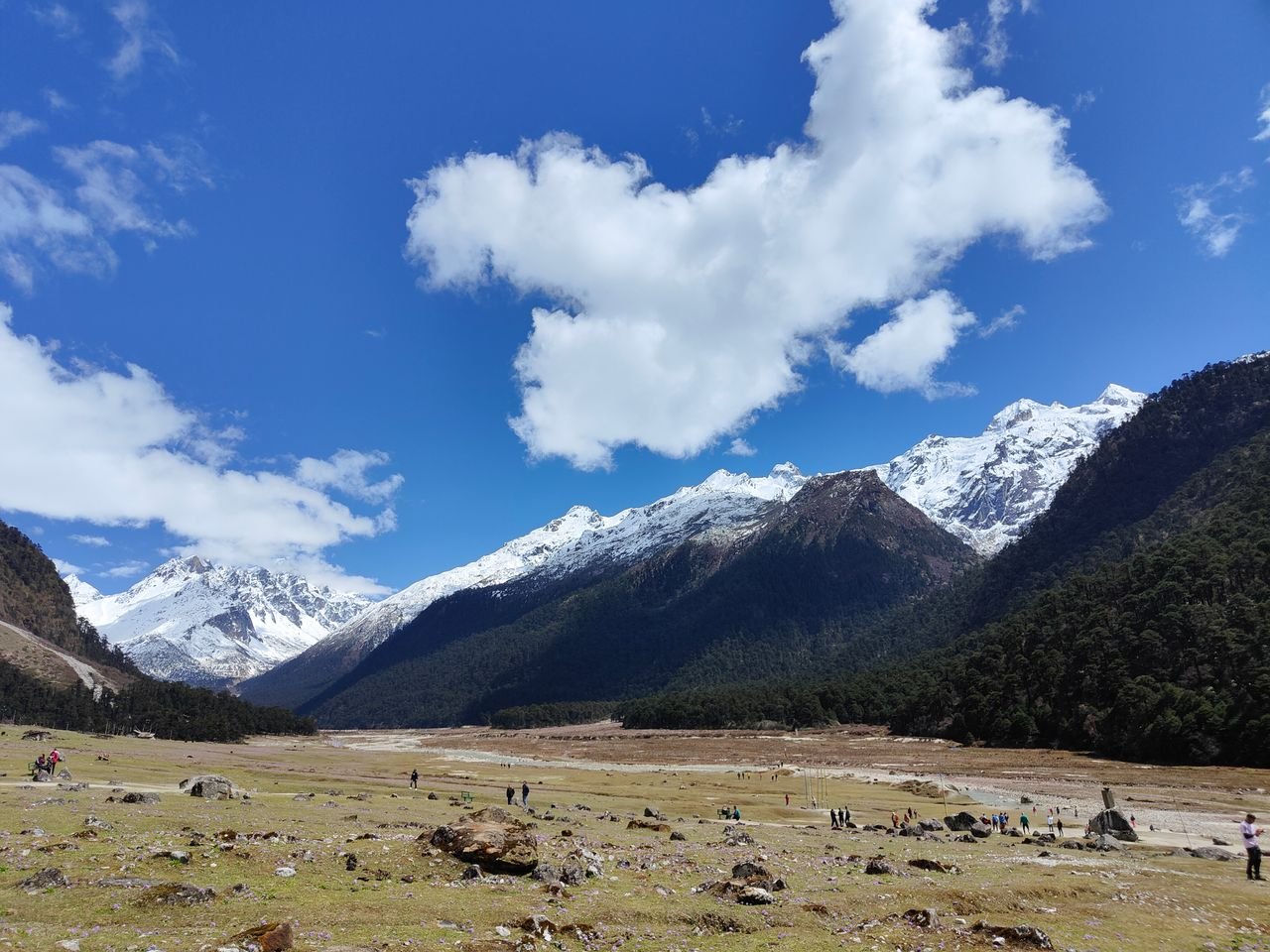
Yumthang Valley, reached from Lachung, is known locally as the Valley of Flowers and earns the name in late spring when rhododendrons cover the slopes. Gurudongmar Lake, from Lachen, sits above five thousand metres and is one of the highest lakes in the world.
Both require permits and both are altitude serious. Gurudongmar in particular is a rapid ascent, and visitors are advised to keep their time at the lake short.
West Sikkim
Pelling offers the clearest close views of Kangchenjunga in the state, best in the early morning before cloud builds. Pemayangtse Monastery nearby is one of Sikkim’s oldest, and the ruins at Rabdentse, the former capital, are a twenty minute walk through forest from the road and almost always empty.
Getting there
Pakyong Airport near Gangtok is Sikkim’s own, though flights are weather dependent and schedules vary. Bagdogra in West Bengal is the reliable option, roughly four to five hours by road to Gangtok. New Jalpaiguri is the nearest major railway station.
Permits for restricted areas including Nathula, Gurudongmar and Yumthang are arranged through registered operators in Gangtok, usually with a day’s notice, and require identity documents and photographs.
When to go
March to May brings the rhododendrons and the flower valleys. October to early December gives the clearest mountain views of the year. Monsoon brings landslides and road closures in the north, and the high valleys are often inaccessible in deep winter.
What nobody tells you
North Sikkim cannot be done independently. The permit system requires you to travel with a registered operator on a fixed route, so the choice is which operator rather than whether to use one. Two nights minimum in Gangtok before going north is not a suggestion. Gurudongmar is a serious altitude gain and people do get sick doing it too fast. And carry cash; ATMs north of Gangtok are unreliable and card acceptance in the villages is close to nil.