
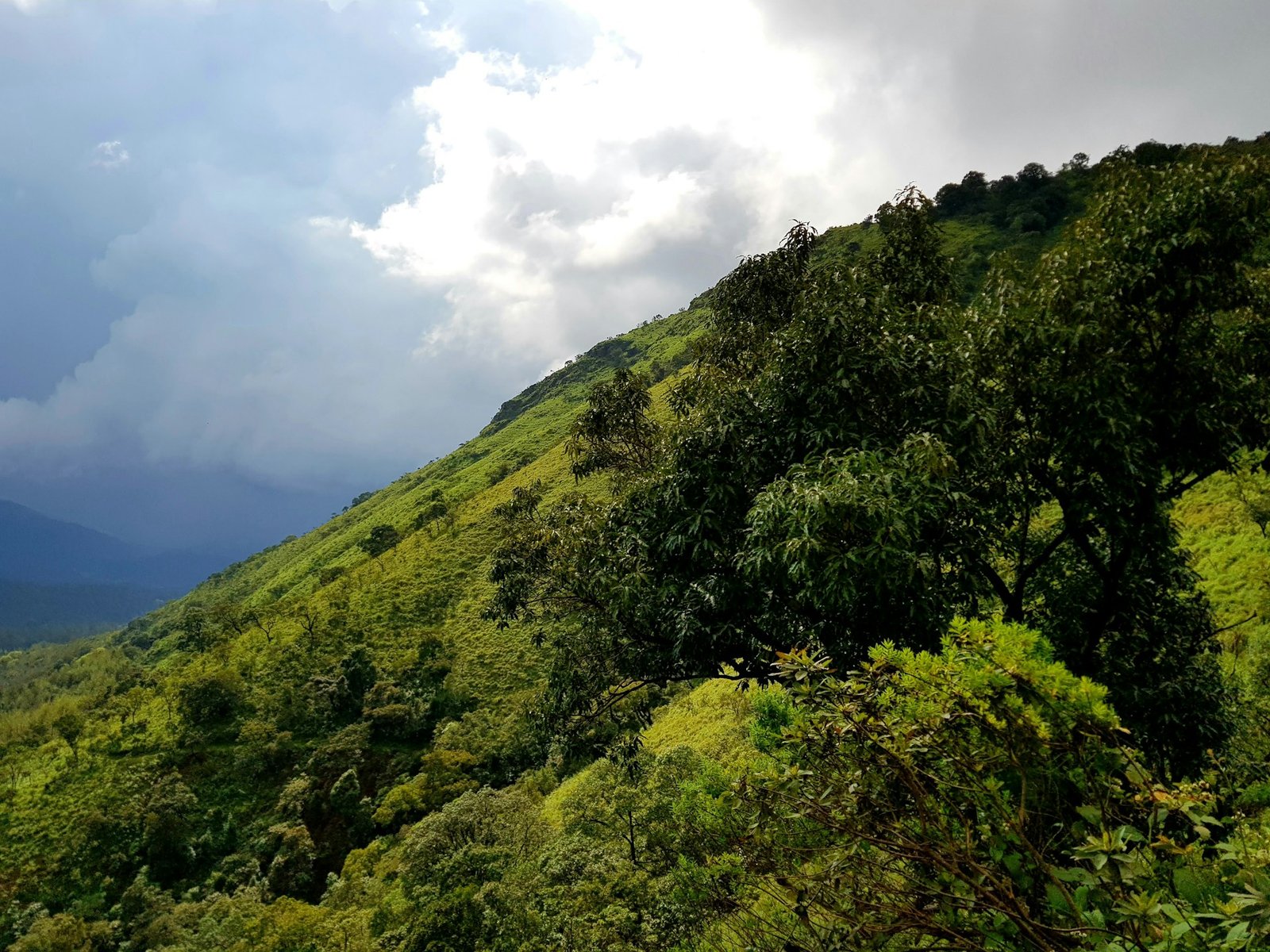
India grows some of the finest shade coffee in the world, and almost all of it comes from two districts in Karnataka that most of the country drives past on the way to somewhere else. Coorg and Chikmagalur sit in the Western Ghats a few hours apart, and between them they produce the majority of India’s coffee under a canopy of native trees rather than in open plantations.
The effect of that shade system is that these hills stay forested. You walk through what looks like jungle and only slowly realise that every third plant is a coffee bush.
Coorg
Officially Kodagu, Coorg has its own distinct culture, its own martial history, and a cuisine that includes pandi curry, a pork preparation cooked with kachampuli vinegar that exists nowhere else in India.
Madikeri is the main town and a reasonable base, though the better stays are on estates outside it. Abbey Falls is the standard stop and gets crowded. Talakaveri, the source of the Kaveri river, sits at the top of a hill and is worth the drive for the view alone. Dubare has an elephant camp on the river, and Nagarhole National Park is close enough for a day of wildlife.
Chikmagalur
Coffee in India began here. The story goes that a Sufi saint named Baba Budan carried seven coffee beans out of Yemen in the seventeenth century and planted them in these hills, and the range still carries his name.
Mullayanagiri is the highest peak in Karnataka and an easy climb from the road. Kudremukh and Kemmangundi offer longer walks. Hebbe Falls needs a jeep through estate land to reach. Chikmagalur is generally quieter than Coorg and better value.
Staying on an estate
Both districts have converted planter bungalows and homestays that sit inside working coffee estates. This is the reason to come. Mornings are misty and completely silent apart from birds, the walk to breakfast goes through coffee and pepper vines, and most estates will take you through the process from cherry to cup.
Rates run from modest homestays to genuinely luxurious old bungalows. Weekends fill quickly with Bangalore traffic; midweek is quieter and cheaper.
When to go
The coffee blossom is the event nobody plans for. Sometime in March, after the first rains, the estates flower white overnight and the whole district smells of jasmine for a few days. It is unpredictable and impossible to book in advance.
Harvest runs from November to February, which is also the driest and most comfortable weather. Monsoon from June to September is spectacularly green and the waterfalls are at full force, but leeches are a genuine feature of any walk.
What nobody tells you
Coorg is roughly five to six hours from Bangalore and Chikmagalur around six, but weekend traffic on the Mysore road can add two hours in each direction. Leaving before dawn changes the drive completely.
Buy coffee from the estate you stay on rather than from roadside shops in town, which sell blends of uncertain origin at tourist prices. And ask whether the estate roasts its own; freshly roasted estate coffee at source is a genuinely different product from what reaches the cities.