
There is a stretch of central Sri Lanka, roughly a triangle drawn between three ancient capitals, that holds more UNESCO World Heritage Sites per square kilometre than almost anywhere else in Asia, and most first time visitors to the island still spend their entire trip on its beaches without ever finding out it exists. The Cultural Triangle, anchored by Anuradhapura, Polonnaruwa, and the hill capital of Kandy, is where Sinhalese civilisation actually took shape, more than two thousand years of royal cities, rock fortresses, and cave temples layered on top of each other in a genuinely small, genuinely manageable area.
A rock that a king turned into a palace, for reasons that still sound implausible
Sigiriya is the site every visitor to the Cultural Triangle ends up talking about first, a sheer granite rock rising 200 metres out of the flat forested plains, crowned with the ruins of a royal palace built by King Kassapa in the 5th century. The story behind it is almost stranger than the rock itself. Kassapa seized the throne after killing his father, and reportedly built his fortress atop Sigiriya partly out of genuine fear of retribution from his half brother, the rightful heir, choosing paranoia and an almost impossible defensive position over a conventional capital.
The climb itself, roughly 1,200 steps, passes the Mirror Wall, a stretch of polished plaster still bearing graffiti and poetry scratched into it by visitors more than a thousand years ago, an unbroken record of tourists reacting to the same view modern visitors are about to see. Near the top, the final staircase passes between two enormous carved lion’s paws, the last remnant of what was once a full lion shaped gateway that gave the site its name, Sigiriya translating roughly to Lion Rock in Sinhalese. The summit itself holds the foundations of the royal palace, an engineered water garden and cooling system that was, for its era, remarkably advanced, and a view across the plains that makes the 1,200 steps feel entirely worth the effort.
Arrive at opening time, seven in the morning, and the climb happens in cooler temperatures with a fraction of the midday crowd, a detail that matters considerably more here than at most Indian heritage sites given how exposed the staircase is to direct sun for most of its length.
An unofficial discount almost nobody outside India knows about
Entry to Sigiriya for most international visitors runs into the tens of dollars, priced deliberately high as part of Sri Lanka’s broader heritage site strategy. Indian travellers, along with citizens of other SAARC nations, Nepal, Bhutan, and Afghanistan among them, are eligible for a significantly reduced rate on presenting an original passport at the gate, a concession that rarely makes it into general travel guides but can cut the entry cost by more than half. It is worth carrying the physical passport specifically for this, not a photocopy or a photograph of it.
The city time forgot, twice
Polonnaruwa, Sri Lanka’s medieval capital from 993 to 1232 AD, sits a short drive from Sigiriya and offers a version of the same era’s ambition without the crowds, sprawling ruins of royal palaces, Buddhist stupas, and monastery complexes spread across a genuinely walkable archaeological park, best explored by bicycle in the cooler hours of the morning. The Gal Vihara, four enormous Buddha images carved directly into a single granite outcrop, ranks among the finest examples of ancient Sinhalese rock carving anywhere on the island, and the relative quiet of Polonnaruwa compared to Sigiriya makes it, for many repeat visitors, the more rewarding of the two ancient cities.
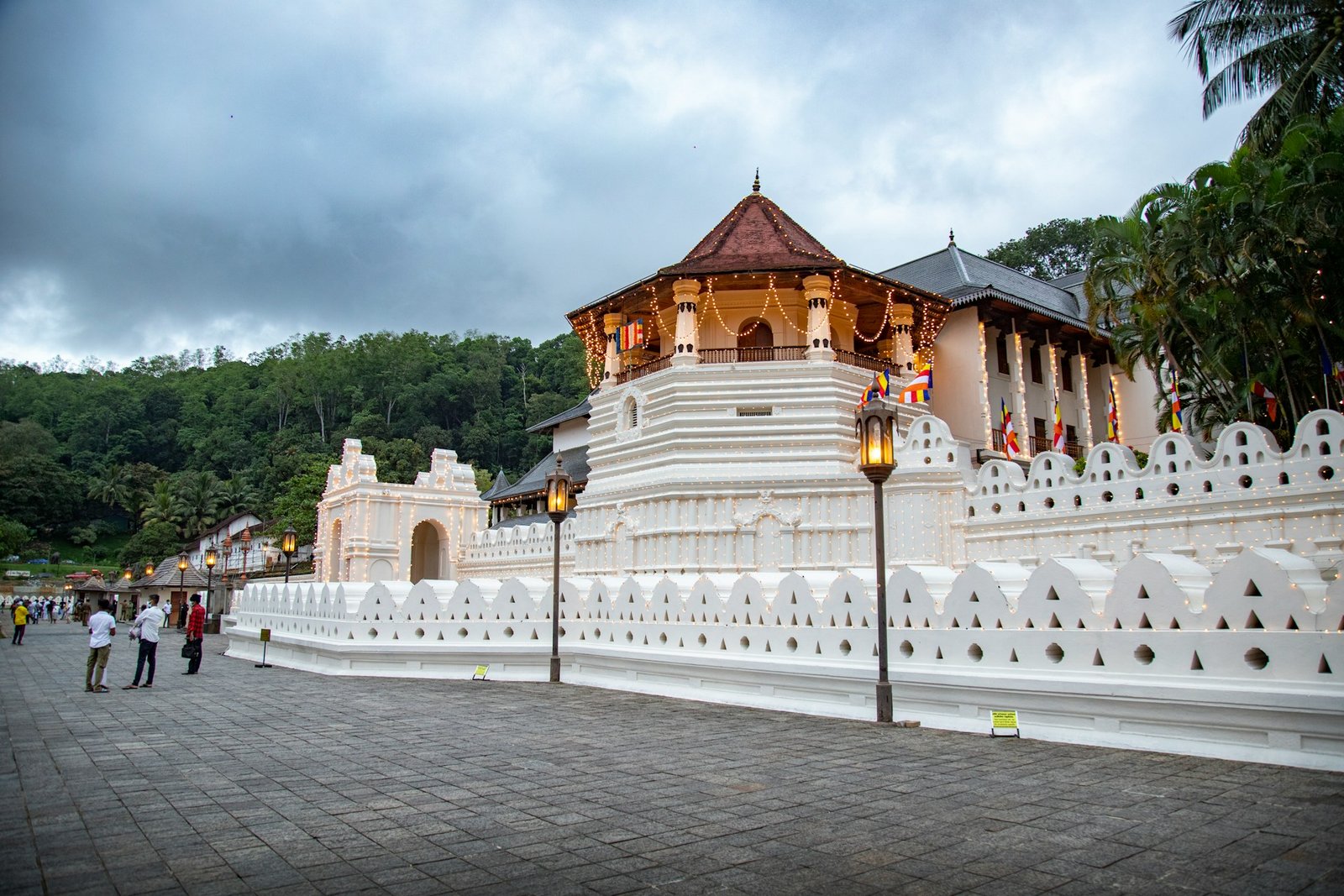
Kandy, the last capital of the Sri Lankan kings and the point of the triangle furthest into the island’s hill country, functions as Sri Lanka’s unofficial cultural capital even today. The Temple of the Sacred Tooth Relic, housing what is believed to be a tooth of the Buddha brought to Sri Lanka in the 4th century and to Kandy specifically in the 16th, remains a fully active site of worship rather than a museum, and visitors should check ahead, since ceremonies periodically close sections of the temple to the public. The city itself, wrapped around the artificial Kiri Muhuda lake and backed by forested hills, retains a character distinctly different from the ancient cities to its north, alive rather than excavated.
The train that has become a destination in its own right
The rail journey from Kandy to Ella, winding through hill country tea plantations, misty mountain passes, and waterfalls, has become one of the most talked about train rides in Asia, less a means of transport than the actual point of a day. Booking first class or observation car seats well in advance is essential during peak season, and the general advice from repeat travellers is to sit on the right hand side for the Kandy to Ella direction, where the wider, more dramatic views consistently fall.
Getting the seasons right
The Cultural Triangle and the hill country share broadly the same ideal window, December through March, when rainfall is at its lowest and daytime temperatures settle into a comfortable range around 27 degrees. This aligns closely with the west and south coast beach season, making a combined itinerary, ancient cities inland, beaches on the coast, genuinely easy to plan around a single winter visit, unlike the island’s east coast, which runs on an entirely opposite calendar through the middle of the year.
Getting there and around
Colombo’s international airport connects directly to most major Indian cities in under two hours, among the shortest international flights available to Indian travellers. From Colombo, the Cultural Triangle sits four to five hours away by road, or considerably less from Kandy, which most itineraries treat as the practical base for the region, close enough to Sigiriya and Polonnaruwa for day trips while offering better accommodation and food options than staying directly in the archaeological zone itself.