
Vietnam stretches over 1,600 kilometres from north to south, curved along the South China Sea like a long, narrow question mark, and that shape is the first thing worth understanding before planning a trip there. A country this elongated does not have one climate or one character. It has three, sometimes running in direct contradiction to each other on the exact same day, which means the real skill in visiting Vietnam is not picking the right season so much as picking the right region for whichever season you happen to be travelling in.
A visa that takes less effort than it should
Indian passport holders can apply for a Vietnamese e-visa entirely online, a process that typically takes three to five business days and costs around 25 US dollars, valid for up to 90 days with multiple entries permitted. There is no embassy visit required, no courier drop off, nothing beyond a form and a photograph submitted through the official government portal. For a country that, until fairly recently, felt like a considerably more involved undertaking to visit from India, this alone has quietly made Vietnam one of the easiest Southeast Asian countries for Indian travellers to reach.
The bay that everyone photographs, and somehow undersells anyway
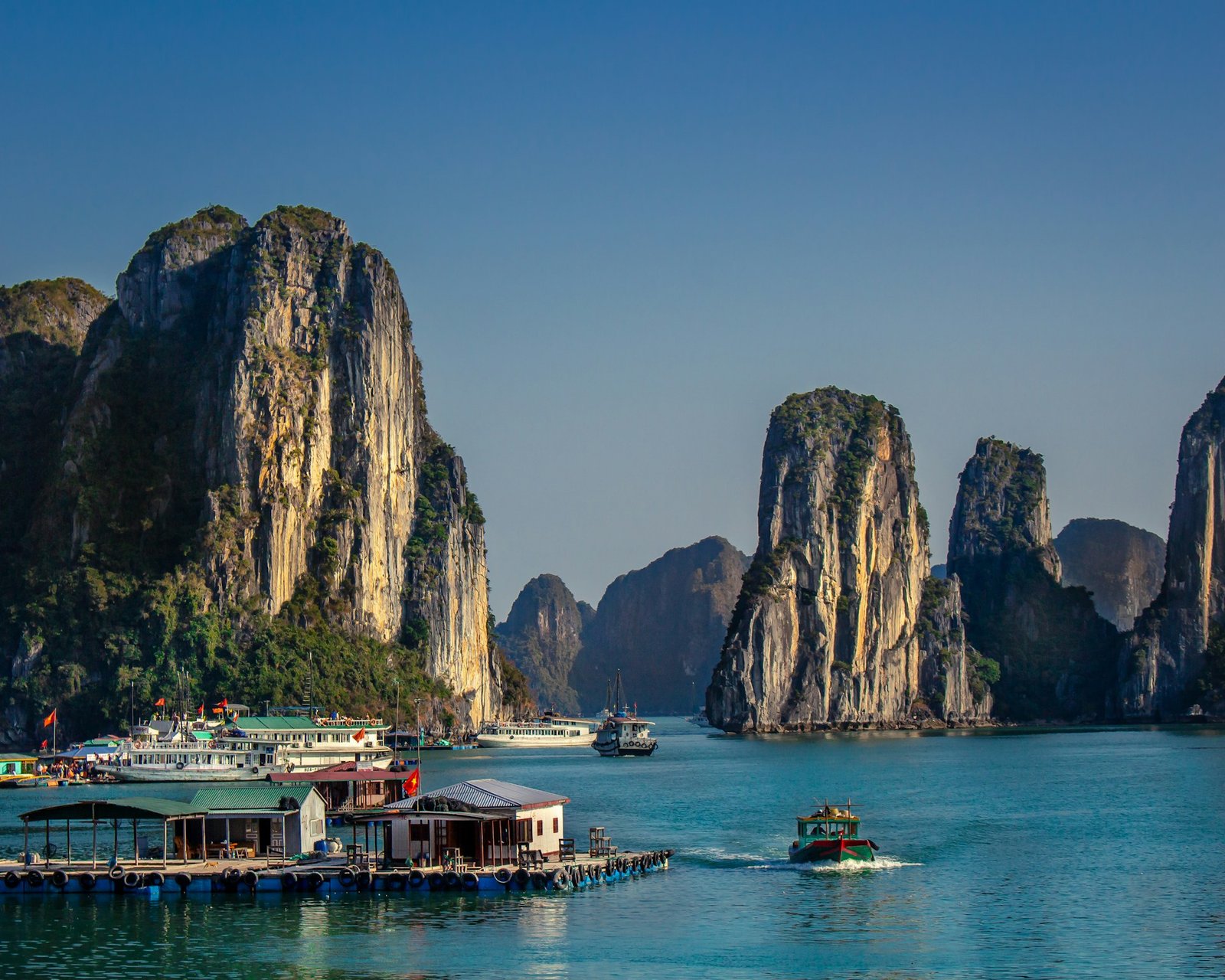
Halong Bay, a UNESCO World Heritage Site since 1994, is the image most people already carry in their head before they arrive, nearly 2,000 limestone karsts and islands rising directly out of emerald water, and the strange thing about seeing it in person is that photographs, despite how iconic they already are, still manage to undersell it. The scale is the part that does not translate to a screen, karst after karst disappearing into the horizon in every direction.
The standard way to experience it is an overnight cruise, one or two nights aboard a boat that includes kayaking between the limestone formations, cave visits at sites like Sung Sot Cave, and fresh seafood meals prepared onboard, an itinerary that has become popular enough with Indian travellers that several operators now run boats with specifically vegetarian friendly menus. March to April and October to November are the recommended windows for the bay itself, avoiding both the summer storm season and the thickest crowds of the peak December to February period.
A town that decided against modernising, on purpose
Hoi An, a UNESCO listed ancient trading port on Vietnam’s central coast, has preserved its old town so deliberately that walking through it after dark, when thousands of coloured silk lanterns are lit along the river and narrow streets, feels less like visiting a heritage site and more like stepping into a town that simply declined to update itself for the last two centuries. The old town remains largely closed to cars, its centuries old shophouses now housing tailors who can turn around custom clothing in as little as 24 hours, a detail that has made Hoi An almost as well known among travellers for bespoke tailoring as for its architecture.
The full moon lantern festival, held monthly on the fourteenth day of the lunar calendar, sees the town switch off its electric lighting entirely in favour of candlelight and paper lanterns, and timing a visit around it, while not essential, adds a layer to the old town’s atmosphere that the regular nightly lantern display does not quite match.
Three climates, one country, and the trick to timing it
The single most useful piece of practical knowledge for an Indian traveller planning a Vietnam trip is this: the north, centred on Hanoi and Halong Bay, is best from October to April, cool and clear, occasionally genuinely cold in winter, cold enough in the mountain town of Sapa to feel closer to a Himalayan hill station than to tropical Southeast Asia. The central coast, Hoi An and Da Nang, runs on almost the opposite calendar, dry and sunny from roughly February through August, with a real risk of typhoons between September and November. The south, Ho Chi Minh City and the Mekong Delta, stays warm and broadly accessible from December through April, with a wet season the rest of the year defined by short, heavy afternoon bursts rather than the sustained monsoon India is used to.
The practical result is that Vietnam rarely has a genuinely bad time to visit the entire country at once, since when one region is wet, another is reliably dry, and a well planned multi region itinerary can usually be built around whichever coast is having its better season.
What ten days actually costs
A well paced ten day circuit, Hanoi, an overnight Halong Bay cruise, Da Nang, Hoi An, and Ho Chi Minh City, runs roughly 68,000 to 100,000 rupees per person including flights from India, domestic transfers, mid range hotels, food, and the Halong Bay cruise itself, according to current operator estimates, with more budget conscious travellers managing the same circuit for meaningfully less by trading cruise cabin category and hotel tier.
Getting there
Direct and one stop flights connect Delhi, Mumbai, Bengaluru, Kolkata, and Hyderabad to both Hanoi and Ho Chi Minh City, flying time from Delhi running approximately five hours, short enough that Vietnam functions as a genuinely realistic long weekend extended into a week, rather than requiring the kind of extended leave a longer haul Southeast Asian trip typically demands.