
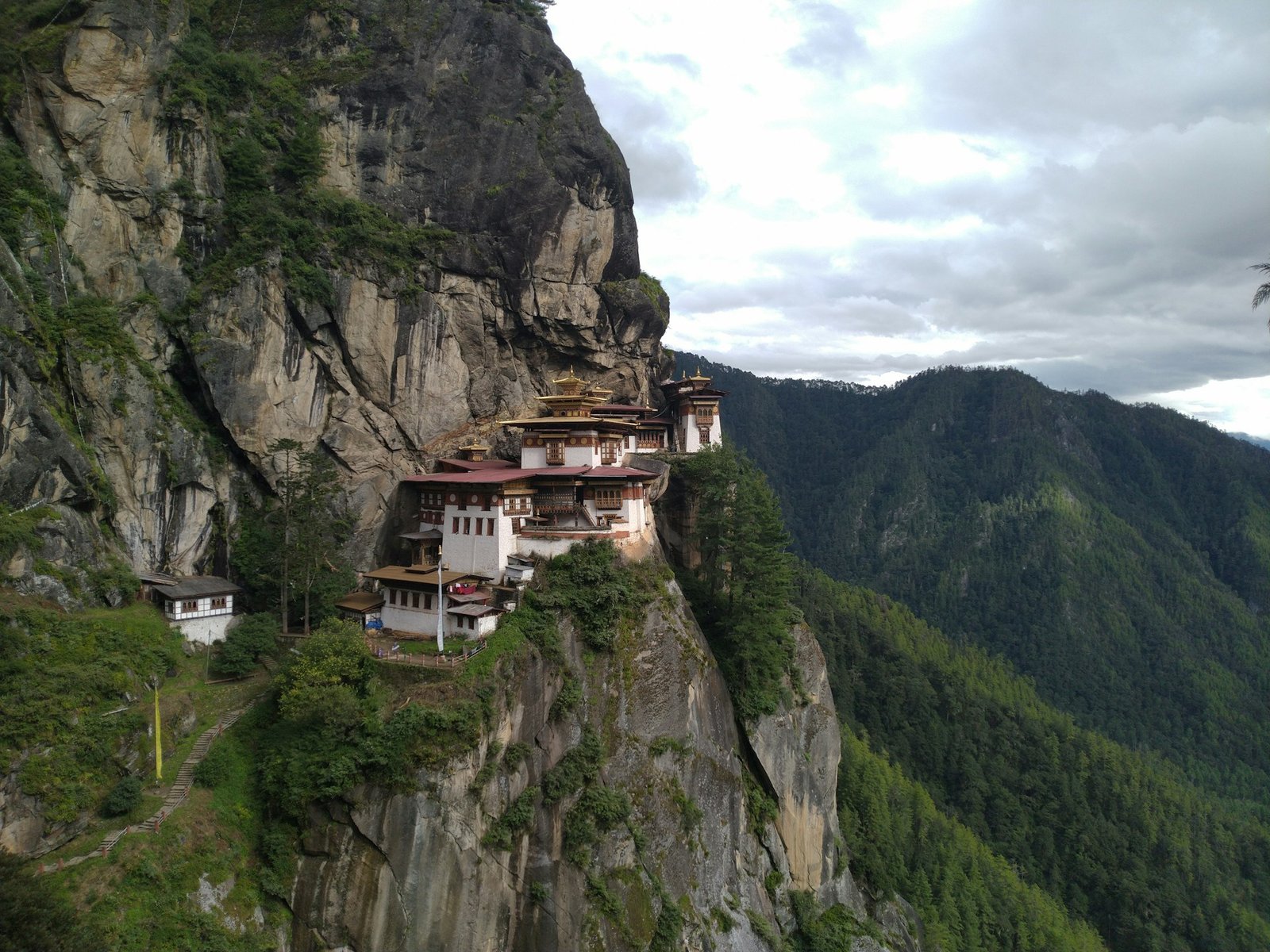
Bhutan is the only country on earth that has built its entire tourism policy around a single, deliberately blunt idea. Rather than chase as many visitors as possible, it charges every international tourist a nightly fee designed to keep numbers low and impact lower, a philosophy the government calls High Value, Low Impact tourism. It sounds, on paper, like a barrier. In practice, it is the reason Bhutan still looks the way it does, roughly 72 percent forested, its rivers unpolluted, its Buddhist monasteries functioning exactly as they have for centuries rather than performing for crowds.
What the fee actually is, and why it matters more for Indians than you would think
The Sustainable Development Fee stands at 100 US dollars per person, per night for most international visitors as of 2026, a rate fixed through August 2027, and it funds conservation, healthcare, education, and infrastructure directly. But there is a detail that changes the entire calculation for an Indian traveller, and it rarely makes it into general coverage of Bhutan’s tourism policy. Indian, Bangladeshi, and Maldivian citizens pay a sharply reduced regional rate, roughly 1,200 Indian rupees per person per night rather than the dollar rate international visitors pay, a fraction of what a European or American tourist is charged for the exact same trip. For a country that markets itself globally as an expensive, exclusive destination, this is the detail that makes Bhutan a genuinely realistic option for Indian travellers in a way it simply is not for most of the rest of the world.
Independent travel is permitted in Paro and Thimphu, but everywhere else in the country requires booking through a licensed Bhutanese tour operator, who arranges the visa, the SDF payment, and typically a guide and driver as part of the package. This is not local bureaucracy for its own sake. It is the mechanism through which the entire low impact model actually functions.
A monastery built into a cliff, the way it looks like it shouldn’t
Paro Taktsang, universally known as the Tiger’s Nest, is the single image most people associate with Bhutan before they have seen anything else about the country, a monastery complex clinging to a sheer cliff face at 3,120 metres, appearing to have no logical means of support. Legend holds that Guru Rinpoche, the figure who brought Buddhism to Bhutan, flew to this exact spot on the back of a tigress, and the monastery has been one of Bhutan’s most sacred sites since it was built around the cliff in 1692.
Reaching it requires a hike of roughly nine kilometres round trip with 620 metres of elevation gain, generally taking four to six hours including time at the top, moderate but genuinely demanding at altitude for anyone not acclimatised. A cafeteria roughly halfway up offers the last real rest point and a formal viewpoint of the monastery across the gorge before the final steep push. According to Bhutan’s Department of Tourism, Taktsang alone accounts for more than 60 percent of all cultural site visits in the country, and once you are standing at the entrance, looking back down at the drop below the monastery’s foundations, it is not difficult to understand why.
Three towns, three completely different rhythms
Paro, small and framed by terraced rice fields, is home to the country’s only international airport, one of the most technically demanding commercial airports in the world, its approach threading directly between mountainsides at 2,235 metres. Most visitors spend their first and last nights here, and the town itself, despite being a first impression for nearly every tourist who enters the country, has stayed remarkably unhurried.
Thimphu, the capital, is the only national capital in the world with no traffic lights, intersections instead managed by white gloved traffic police in small elevated booths, a detail Bhutanese officials have kept deliberately even as the city has modernised around it. The enormous bronze Buddha Dordenma statue overlooking the valley, and the weekend market where farmers from surrounding villages sell produce, offer two very different windows into how the capital actually functions.
Punakha, the old winter capital, holds what many consider Bhutan’s most beautiful building, Punakha Dzong, a fortress monastery set at the confluence of two rivers, its whitewashed walls and golden roof reflected in the water below. It remains the site of royal weddings and major religious ceremonies, not a preserved relic but a genuinely active centre of both governance and faith.
When to actually go
March through May and September through November are considered Bhutan’s two prime windows, spring bringing rhododendrons into bloom across the hillsides and clear mountain views, autumn delivering similarly clear skies after the summer monsoon has passed. Winter, December through February, brings cold, quiet valleys and occasional snow at higher altitudes, a starker, starkly beautiful version of the country that some repeat visitors prefer specifically for how few other tourists they encounter.
What a trip actually costs
Beyond the nightly Sustainable Development Fee, a separate visa fee of 40 US dollars applies once per entry, and the licensed tour package itself, covering in-country transport, accommodation, a guide, and meals, varies considerably by season and comfort level. Tiger’s Nest itself carries an additional small entrance charge for the monastery complex on top of the SDF. For Indian travellers taking advantage of the regional rate, a week in Bhutan covering Paro, Thimphu, and Punakha remains genuinely comparable in cost to a mid range domestic Himalayan trip, a fact that surprises most people encountering Bhutan for the first time.
Getting there
Druk Air and Bhutan Airlines operate the only flights into Paro, with direct connections from several Indian cities including Delhi, Kolkata, Mumbai, and Bagdogra. Indian nationals additionally have the option of entering by road via West Bengal, through the border town of Phuentsholing, a route unavailable to most other nationalities and one that adds its own slow, scenic transition from the Indian plains into the Himalayan foothills before the mountains properly begin.