
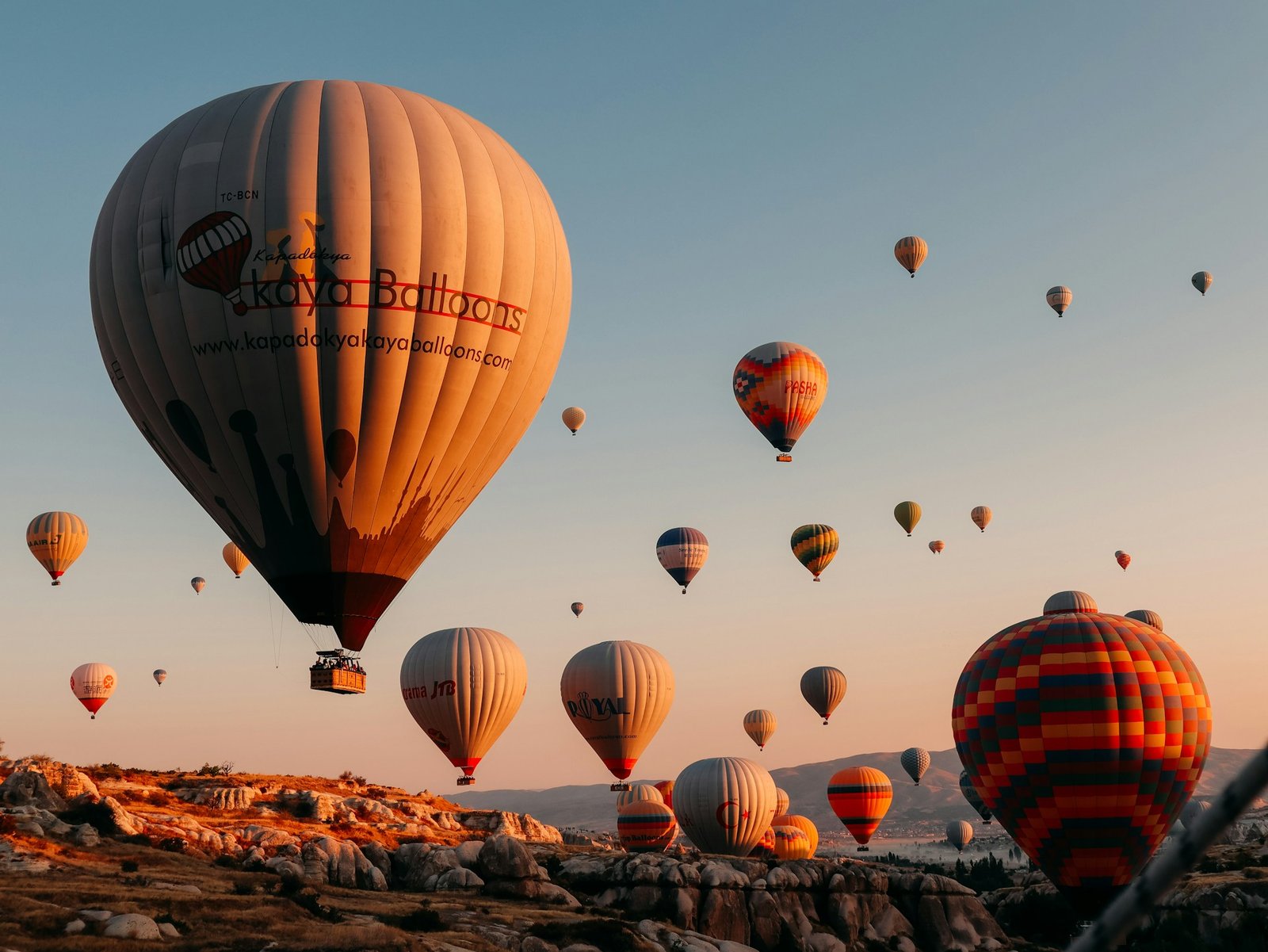
Turkey does something no other country manages quite as neatly. It puts a city that was the capital of two of the largest empires in history within an hour’s flight of a landscape that looks like it belongs on another planet, and it does both at a cost that compares favourably with a week in western Europe.
Istanbul
The city sits on two continents, which is the fact everyone repeats, and the more useful observation is that it has been continuously important for around sixteen centuries. It was Constantinople, capital of the Byzantine empire, and then the seat of the Ottomans, and both left their architecture standing in the same square kilometre.
The Hagia Sophia was built in the sixth century as a cathedral, became a mosque, became a museum, and is a mosque again. Its dome held the record as the largest in the world for the better part of a thousand years. The Blue Mosque faces it across a park. The Basilica Cistern sits underground nearby, a forest of columns in shallow water.
Topkapi Palace ran the Ottoman empire for four centuries. The Grand Bazaar is one of the oldest covered markets on earth and the Spice Bazaar is smaller, better and less exhausting.
Then take the ferry up the Bosphorus, which costs very little and is the best hour in the city.
Cappadocia
An hour by air to central Anatolia and the landscape stops making sense. Volcanic ash compacted into soft rock, eroded over millions of years into spires, cones and ridges, and then hollowed out by people who found it easy to carve.
The result is a region of cave dwellings, rock cut churches with Byzantine frescoes still on the walls, and entire underground cities, some descending many levels, built as refuges. Derinkuyu and Kaymakli are the two usually visited. Goreme Open Air Museum holds the best of the painted churches.
And the balloons. On a clear morning something in the order of a hundred hot air balloons lift off at sunrise together, and it is one of the genuinely unforgettable sights in travel. Flights are weather dependent and cancelled often in winter, so build in more than one morning if this is the reason you are going.
What it costs
Turkey remains reasonable by European standards. Cave hotels in Goreme and Uchisar, which are exactly what the name suggests, run from modest to genuinely luxurious. Domestic flights between Istanbul and Kayseri or Nevsehir are frequent and cheap. Food is excellent and inexpensive almost everywhere.
What nobody tells you
Visa rules for Indian passport holders have changed more than once in recent years, and eligibility for the e-visa has at times depended on holding a valid visa or residence permit from certain other countries. Confirm the current position on the official portal before booking anything, rather than relying on what somebody did last season.
Balloon flights book out weeks ahead in the high season and are cancelled at short notice for wind. Operators reschedule or refund, but if you have one morning in Cappadocia you may well not fly.
Istanbul is a walking city built on hills, and the distances between the major sites are longer than the map suggests. Trams and ferries are cheap and a rechargeable transport card is worth buying on arrival.
April to May and September to November are the best months. Summer is hot and crowded, and winter in Cappadocia is beautiful under snow but grounds a great many balloons.
Turkish cuisine is generous with lamb and beef, but vegetarians do better here than in most of Europe. Mezes, lentil soups, stuffed vegetables and fresh bread will carry you comfortably.