
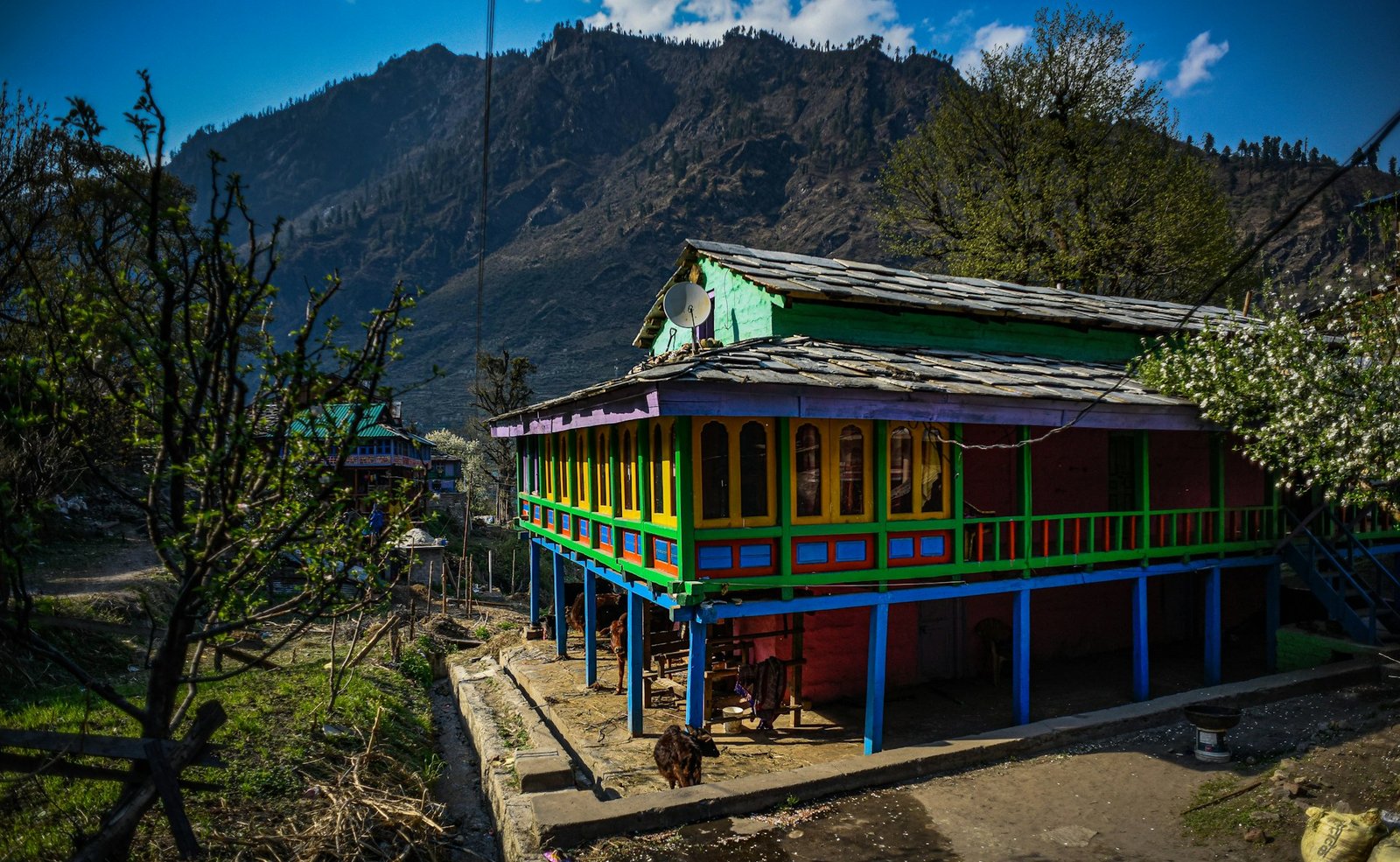
There is a category of Indian accommodation that sits between a hotel and a friend’s house, and it consistently produces better travel than either. The homestay is a room in someone’s home, usually with meals cooked by the family, usually costing between fifteen hundred and three thousand rupees a night, and usually the single best decision on an itinerary.
This is not about saving money, though it does. It is that a homestay places you inside a place rather than adjacent to it. You eat what the household eats. You learn where things are from someone who has always lived there. And in a good number of Indian destinations, the homestay is not the budget option, it is the only option, and that turns out to be the point.
Where the homestay is the whole experience
In Turtuk, the Balti village in Ladakh that opened to visitors only in 2010, the homestays serve buckwheat pancakes, apricot chutney and yak butter tea that you will not find on any menu elsewhere in India.
In Spiti, village homestays in Langza, Komic and Demul are run through a community tourism model that spreads income across households rather than concentrating it. Rooms are simple and the altitude is real, but the arrangement works.
In Ziro Valley in Arunachal, staying with an Apatani family is the only way to understand a wet rice cultivation system that agricultural researchers travel from around the world to study.
In Kerala, family run houses in the backwaters and the hills offer food that no hotel kitchen reproduces, cooked to household proportion rather than buffet scale.
What you actually get
Expect a clean room, hot water that may be scheduled rather than constant, and meals eaten with or near the family. Expect the food to be regional and repetitive in the best way. Expect conversation, and expect it to be the reason you remember the stay.
Do not expect hotel service. Nobody is on call at two in the morning. Housekeeping happens once. The wifi is what it is.
How to choose one
Read the reviews that mention the family rather than the room. A homestay lives or dies on the people running it, and the reviews will tell you within three entries whether they are engaged or absent.
Confirm meals in advance. Most homestays in remote areas include breakfast and dinner because there is nowhere else to eat, and that is a feature, not a restriction. Ask about it rather than assuming.
Book directly where a phone number is available. Village homestays often list on aggregators at inflated rates or not at all, and calling frequently gets you a better price and a real conversation about whether the room suits you.
What nobody tells you
Carry cash. Most village homestays do not accept cards and connectivity for UPI is unreliable outside towns.
Ask before photographing inside the house. This is somebody’s home, not a property, and the distinction matters.
And if you are the kind of traveller who wants to be left alone entirely, a homestay is the wrong choice and there is no shame in that. The interaction is the product.