
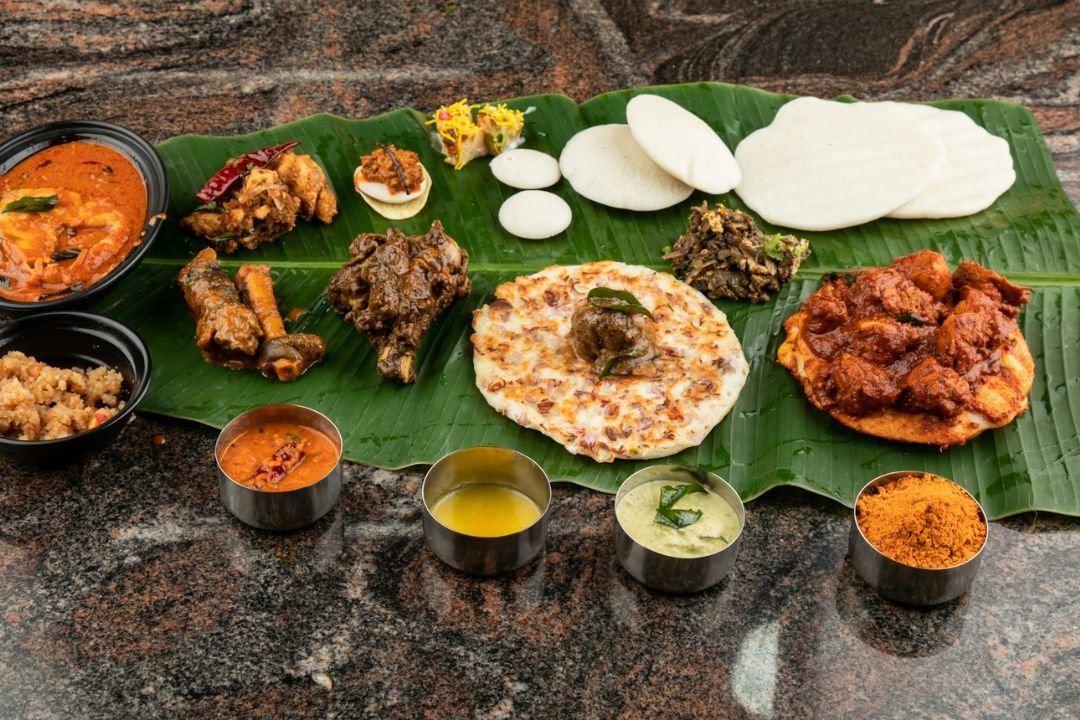
Rain changes everything about food. It sharpens appetite, deepens comfort, and makes certain combinations chai and pakoras, sol kadhi and fresh fish, mustard-heavy Bengali preparations that warm from the inside feel not just delicious but necessary.
India’s food is already extraordinary. In monsoon, eaten in the right places at the right moments, it becomes something close to transcendent.
These are the food trails worth travelling for.
1. The Konkani Coast Maharashtra and Goa
The Konkan coast that narrow strip between the Western Ghats and the Arabian Sea has one of India’s great regional cuisines, and monsoon is when it is at its finest.
The fishing boats go out less frequently in rough weather, which means the fish that does arrive is extraordinarily fresh kept alive in tanks until the moment it is cooked. The kokum that grows in the Ghats is at its most tart and fragrant. And the coconut that forms the base of almost everything is newly harvested.
What to eat: Sol kadhi (coconut milk and kokum simultaneously cooling and warming, a monsoon miracle), kolambi bhaat (prawn rice), bombil fry (Bombay duck, battered and fried to a crisp that shatters like glass), and crab gassi a coconut-based curry with a heat that builds slowly and lingers beautifully.
Where: Any small family restaurant in Malvan, Vengurla, or the villages of coastal Goa. The smaller and more unremarkable the exterior, the better the food inside.
2. Kolkata in the Rains
Kolkata is always worth visiting for the food. In monsoon when the city slows down, the maidan fills with shallow water, and the light turns silver it becomes something additionally atmospheric.
What to eat: Kosha mangsho (slow-cooked mutton, as dark and complex as a good novel) with luchi at any old adda. Ilish Hilsa fish, the great Bengali obsession, at its peak in monsoon when it runs upriver to breed. Mishti doi from the old confectioners of College Street. Phuchka from the street vendors of Park Street in the rain, which is an experience as much as a food.
Where: 6 Ballygunge Place for the definitive Bengali thali. Kasturi for the ilish preparations. And for phuchka just follow the crowd.
3. Kerala Backwaters The Houseboat Kitchen
A Kerala houseboat journey in monsoon is one of the great slow travel experiences in India the backwaters running high and fast, the coconut palms bending in the wind, the rain hitting the water in silver curtains.
And the food cooked on board by a cook who has been making these preparations his entire life, using fish pulled from the water that morning is extraordinary.
What to eat: Karimeen pollichathu (pearl spot fish, marinated and cooked in banana leaf), prawn moilee (a coconut milk curry of great delicacy), appam with stew, and the fish curry that every cook makes differently and every cook swears is the definitive version.
Where: Book a private houseboat with a dedicated cook rather than the larger party boats. The difference in experience is significant.
4. Pune’s Monsoon Street Food Circuit
Pune does monsoon street food better than almost anywhere in India and the city’s food culture, shaped by its Maharashtrian roots and its large student population, produces a street food scene of extraordinary range and quality.
What to eat: Misal pav, the spicy sprouted lentil curry with its toppings of farsan and raw onion, eaten at 8am in the rain outside Bedekar’s, which has been making it since 1935. Bhakarwadi from Chitale Bandhu. Sabudana khichdi at any traditional Puneri restaurant. And at sunset vada pav from the stall outside Fergusson College, which has been providing the definitive version since before most of its customers were born.
5. Amritsar to Patiala The Punjab Food Trail
Punjab in monsoon means the fields are vivid green, the dhaba smoke rises into grey skies, and the food already the most generous in India acquires an additional intensity.
What to eat: Makki di roti and sarson da saag at any village dhaba north of Ludhiana in monsoon, the mustard greens are fresh and the combination achieves a simplicity that borders on perfection. Dal makhani that has been on the fire since dawn. And lassi thick, cold, slightly salted that arrives in a clay glass so large it requires two hands.Where: Kesar Da Dhaba in Amritsar for the definitive dal makhani. Pal Dhaba on GT Road for the full highway experience. And for the sarson da saag find the smallest village dhaba you can, order, and wait.