
Assam is the easiest state in the northeast to reach and the one most often used as a corridor to somewhere else. Flights land at Guwahati, travellers change for Shillong or Tawang, and the state itself goes past the window.
This is a mistake of a fairly high order. Assam holds two of the more remarkable things in the country, and they are ninety minutes apart.
Kaziranga
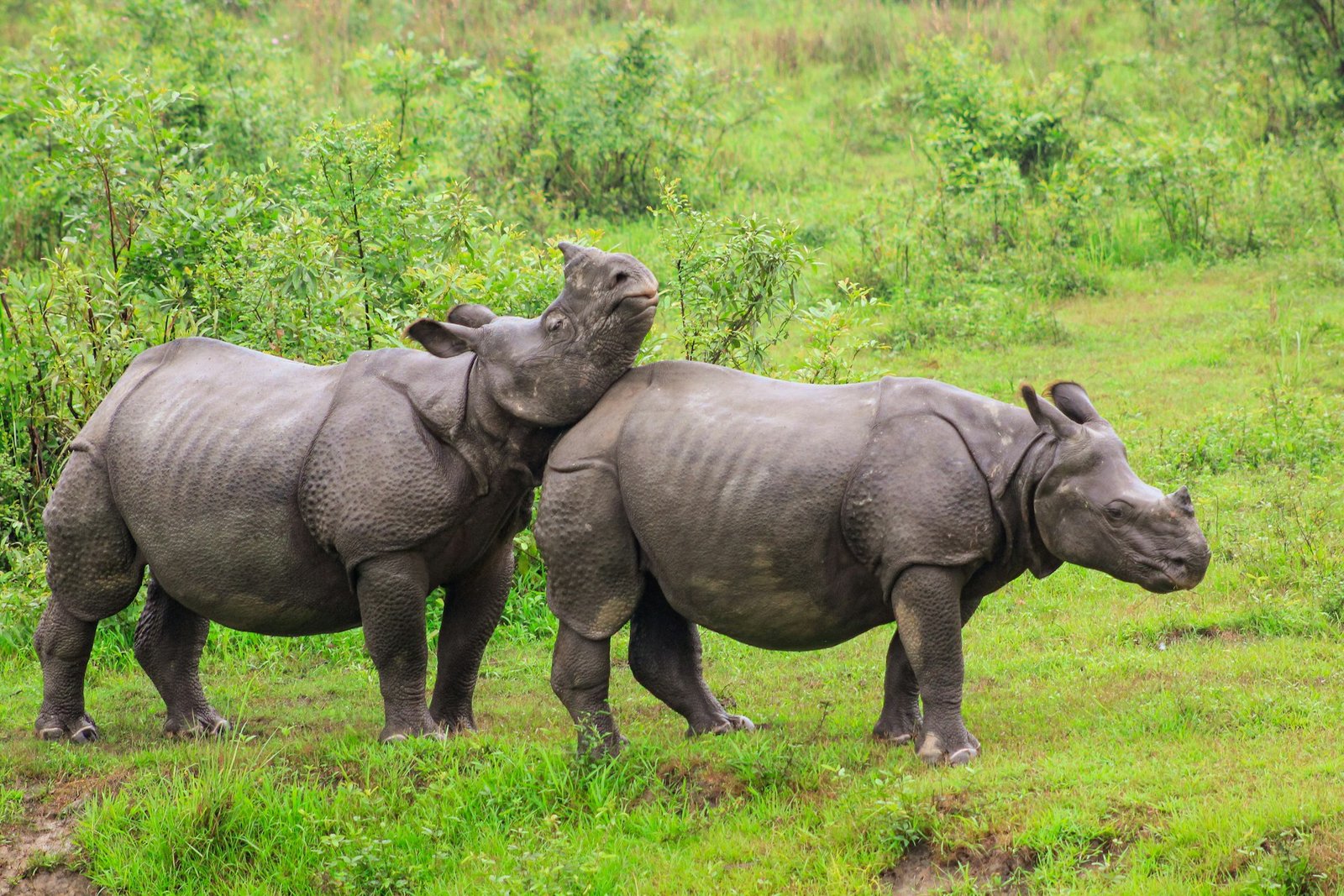
Kaziranga National Park holds roughly two thirds of the world population of the greater one horned rhinoceros. When the area was first given protection in 1908 it held about twelve of them. The 2022 census counted two thousand six hundred and thirteen, which makes it one of the more successful conservation stories anywhere in the world.
It has been a UNESCO World Heritage Site since 1985 and a tiger reserve since 2006. The 2024 survey identified a hundred and forty eight adult tigers and ranked it third in the world for tiger density, which is not what most visitors come for and is a reasonable second reason to. Its landscape of tall elephant grass and shallow wetland is entirely unlike the dry forests where most Indian wildlife tourism happens.
The park is divided into ranges, of which the western range at Bagori and the central range at Kohora are the most visited. Jeep safaris run morning and afternoon.
Majuli
An hour and a half north, in the middle of the Brahmaputra, sits Majuli, generally described as the largest river island in the world. It is reached by ferry from Jorhat, and the crossing is part of the experience.
Majuli is the centre of Assamese Vaishnavism. Its satras are monasteries founded from the fifteenth century onward, where monks still practise the mask making, dance drama and manuscript painting traditions that the reformer Sankardev established. Auniati, Kamalabari and Samaguri are the ones usually visited, and Samaguri is where the masks are made.
The island is flat, green, quiet and steadily shrinking. Erosion by the Brahmaputra has taken a substantial part of its area over the last century, which lends the visit a certain urgency.
The tea
Upper Assam grows more tea than anywhere else in India and several colonial era planter bungalows around Jorhat and Dibrugarh now take guests. Staying on a working estate, with a factory tour and a proper tasting, is among the better things to do in the state and almost nobody does it.
What nobody tells you
Kaziranga closes during the monsoon, usually from around May to October, because the park floods. The reliable window is November to April. This is not a park you can visit year round.
Safari permits and jeeps are best arranged in advance through your accommodation, particularly in December and January when domestic visitors arrive in numbers.
The Majuli ferry runs to a fixed and limited schedule and does not always run in bad weather. Check the day’s timings before committing to a return the same day, and consider staying a night on the island instead.
Guwahati is the airport. Jorhat has a smaller one that saves several hours if you are going straight to Majuli or the tea belt.