
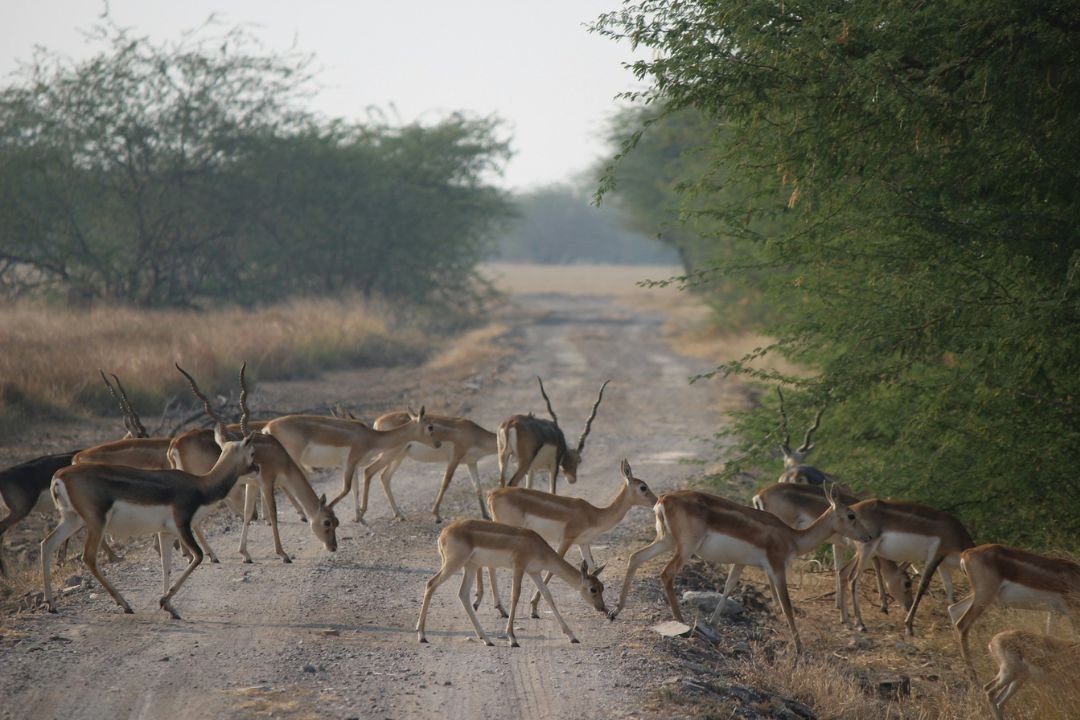
India has always been a land of extraordinary contradictions. Where else in the world can you watch a tiger emerge from golden grasslands at dawn, then return to a candlelit dinner under the stars, your tent furnished with handwoven textiles and a butler who remembers you take your chai without sugar?
This is not your grandfather’s wildlife safari. India’s best sanctuaries have quietly evolved into some of the world’s most compelling luxury travel destinations, where conservation isn’t a compromise, it’s the entire point.
Here are India’s finest wildlife sanctuaries for the traveller who refuses to choose between comfort and conscience.
1. Ranthambore National Park, Rajasthan
Where Royalty Meets the Wild
Ranthambore is theatre. The ruins of a 10th-century fort rising above the jungle, ancient temples swallowed by banyan trees, and somewhere in the tall grass, a Bengal tiger watching you before you watch her.
This is India’s most dramatic tiger reserve, and arguably its most photogenic. The park’s open terrain makes tiger sightings more frequent than almost anywhere else in the country.
Stay: Oberoi Vanyavilas consistently ranked among Asia’s best luxury lodges. Tented suites with private sit-outs, a swimming pool that seems to dissolve into the jungle, and safari guides who have spent decades reading Ranthambore’s stories.
Best time to visit: October to April. The park closes during monsoon but that’s what makes the post-monsoon season magical. The jungle is impossibly green, waterholes are full, and tigers are active.
TravelNode Insider: Request Zone 3 or Zone 4 for your safari these zones cover the lake areas where tigers are most frequently spotted at dawn.
2. Kaziranga National Park, Assam
The Last Kingdom of the One-Horned Rhino
There are more one-horned rhinoceroses in Kaziranga than anywhere else on Earth. Over 2,600 of them roam freely across floodplains that turn gold in winter light, alongside wild elephants, Asiatic water buffalo, and if you’re extraordinarily lucky, a Bengal tiger.
Kaziranga is UNESCO-listed, and rightly so. This is conservation at its most triumphant, the park brought the rhino back from the edge of extinction.
Stay: Diphlu River Lodge intimate, beautifully designed, and run by people who genuinely care about the ecosystem they sit within. Jeep safaris, elephant safaris, and boat rides along the Brahmaputra are all possible.
Best time to visit: November to April. The park floods dramatically during monsoon which is actually spectacular to witness from a distance.
TravelNode Insider: Book an elephant safari at dawn. Walking at rhino-height through the tall grass, watching the mist lift off the floodplains there is nothing quite like it in India.
3. Jim Corbett National Park, Uttarakhand
India’s Oldest, Most Storied Reserve
Established in 1936, Jim Corbett is where Indian conservation began. Named after the legendary hunter-turned-conservationist who wrote Man-Eaters of Kumaon, the park sits at the foothills of the Himalayas a landscape of sal forests, rivers, and grasslands that has inspired writers, naturalists, and travelers for nearly a century.
Tigers are here. So are leopards, elephants, gharials, and over 600 species of birds making Corbett a paradise for wildlife photographers.
Stay: Solluna Resort or The Riverview Retreat both offer the rare combination of genuine comfort and proximity to the park’s most rewarding zones.
Best time to visit: November to June. The Dhikala zone the park’s crown jewel opens fully in mid-November.
TravelNode Insider: The Dhikala Forest Rest House, run by the forest department, offers the most immersive experience in the park. Book months in advance — it sells out completely.
4. Bandhavgarh National Park, Madhya Pradesh
Highest Tiger Density in India
If seeing a tiger is your primary goal, Bandhavgarh gives you the best odds in the country. The park has one of the highest tiger densities in the world and its relatively compact size means you’re never far from where the action is.
The landscape is ancient and layered caves with 2,000-year-old paintings, a hilltop fort with a reclining Vishnu carved into rock, and below it all, tigers moving through teak forests like amber shadows.
Stay: Samode Safari Lodge architecturally stunning, deeply comfortable, and staffed by naturalists who know every tiger in the park by name.
Best time to visit: October to June.
TravelNode Insider: Ask your naturalist about the white tigers of Bandhavgarh a genetic lineage that originated here and changed the course of captive tiger breeding worldwide.
5. Periyar Tiger Reserve, Kerala
Where Jungle Meets Spice Country
Most wildlife sanctuaries ask you to leave the landscape behind when you return to your lodge. Periyar doesn’t because the landscape is everywhere. You arrive through cardamom hills and pepper vines, the air thick with the smell of spice, and find yourself on a lake where elephants wade at dusk.
This is Kerala’s great wildlife secret a place where the Western Ghats meet ancient trade routes, and where responsible tourism has been pioneered for decades by the local community.
Stay: Spice Village by CGH Earth the gold standard for sustainable luxury in India. Cottages built from local materials, food grown on site, and a philosophy that genuinely puts the ecosystem first.
Best time to visit: September to April.
TravelNode Insider: Book the Bamboo Rafting experience a half-day journey through the core forest zone accessible only to small groups. One of the most beautiful things you can do in India.
6. Satpura National Park, Madhya Pradesh
India’s Best Kept Secret
While Ranthambore and Corbett draw the crowds, Satpura sits quietly in the highlands of Madhya Pradesh, known only to those who know. No other park in India offers what Satpura does walking safaris, cycling safaris, and canoe safaris, all within a landscape of sandstone gorges, waterfalls, and dense deciduous forest.
Wildlife here includes tigers, leopards, sloth bears, Indian giant squirrels, and over 300 bird species. But Satpura is less about the checklist and more about the feeling of being genuinely, unhurriedly inside a wild landscape.
Stay: Forsyth Lodge arguably the finest wildlife lodge in India. Small, exquisitely designed, and run with a level of care that makes you want to never leave.
Best time to visit: October to June.
TravelNode Insider: Request a night walk with the naturalist. Satpura is one of very few parks in India where this is permitted and what you encounter after dark will stay with you.
A Note on Responsible Travel
Every sanctuary on this list is home to communities, ecosystems, and animals that existed long before tourism arrived and must continue to exist long after. TravelNode encourages travelling with lodges and operators that invest directly in conservation and local livelihoods. When you travel with conscience, the wild places win.
Lot of efforts appears to have been put in while compiling the magazine. Will know more only after a through reading of the site.