
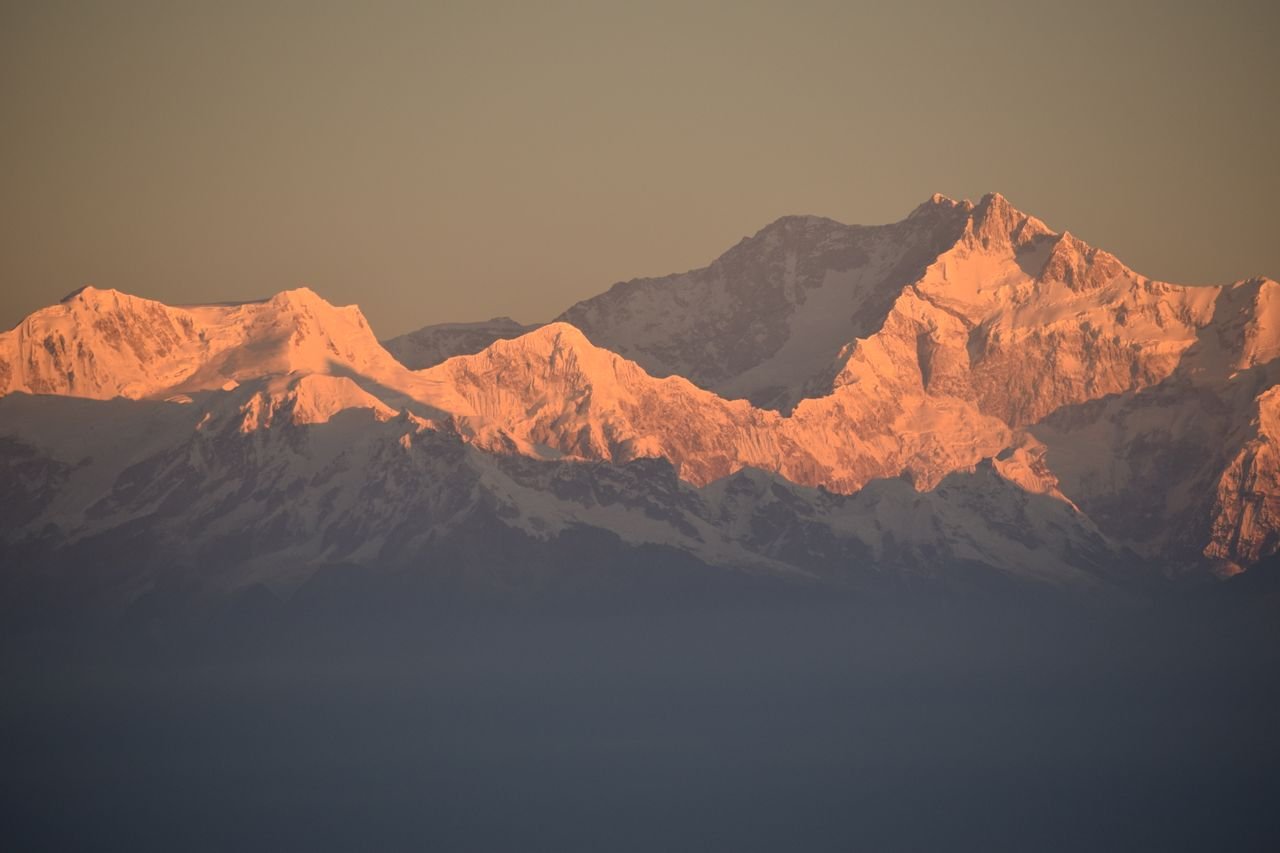
Darjeeling has a reputation problem. Many people go in summer, when the town is packed and the clouds sit on the ridge like a lid, and they come home saying they never saw the mountains. They were in the right place at the wrong time.
October and November are when the air clears after the monsoon. Kanchenjunga, the third highest peak on earth at 8,586 metres, stands across the horizon in the early morning, and on a good day you can see it from your hotel window before you have had your first cup of tea. Tiger Hill at sunrise is crowded and a little theatrical, but the view is real. For something quieter, walk the ridge road above the town before the vehicles wake up.
The tea is better timed too. Autumn is the season of the last flush of the year, and many estates offer tastings and short walks through the rows. Ask for a sample of the first flush from spring alongside it. The difference teaches you more than any label can.
Then there is the train. The Darjeeling Himalayan Railway, a narrow gauge line that has run since the nineteenth century and is a UNESCO World Heritage Site, climbs about 88 km from New Jalpaiguri. The full ride is slow, sometimes very slow. Most visitors take the short Joy Ride from Darjeeling to Ghum, which stops at the Batasia Loop, and are happy with it.
Do the second half. Kalimpong, a few hours away, sits lower and feels like a different century. It has orchid nurseries, old mission schools and a slower pace that Darjeeling lost to tourism years ago. Spend a night or two there before you head back down.
For walkers. The Singalila ridge trek towards Sandakphu is one of the few places where you can see Everest, Kanchenjunga, Lhotse and Makalu in a single sweep. It needs a guide, a permit and a few days, but it is the best use of October clarity.
Getting there. Fly to Bagdogra or take a train to New Jalpaiguri, then drive. Allow three to four hours to Darjeeling, and expect the road to be slow after rain.