
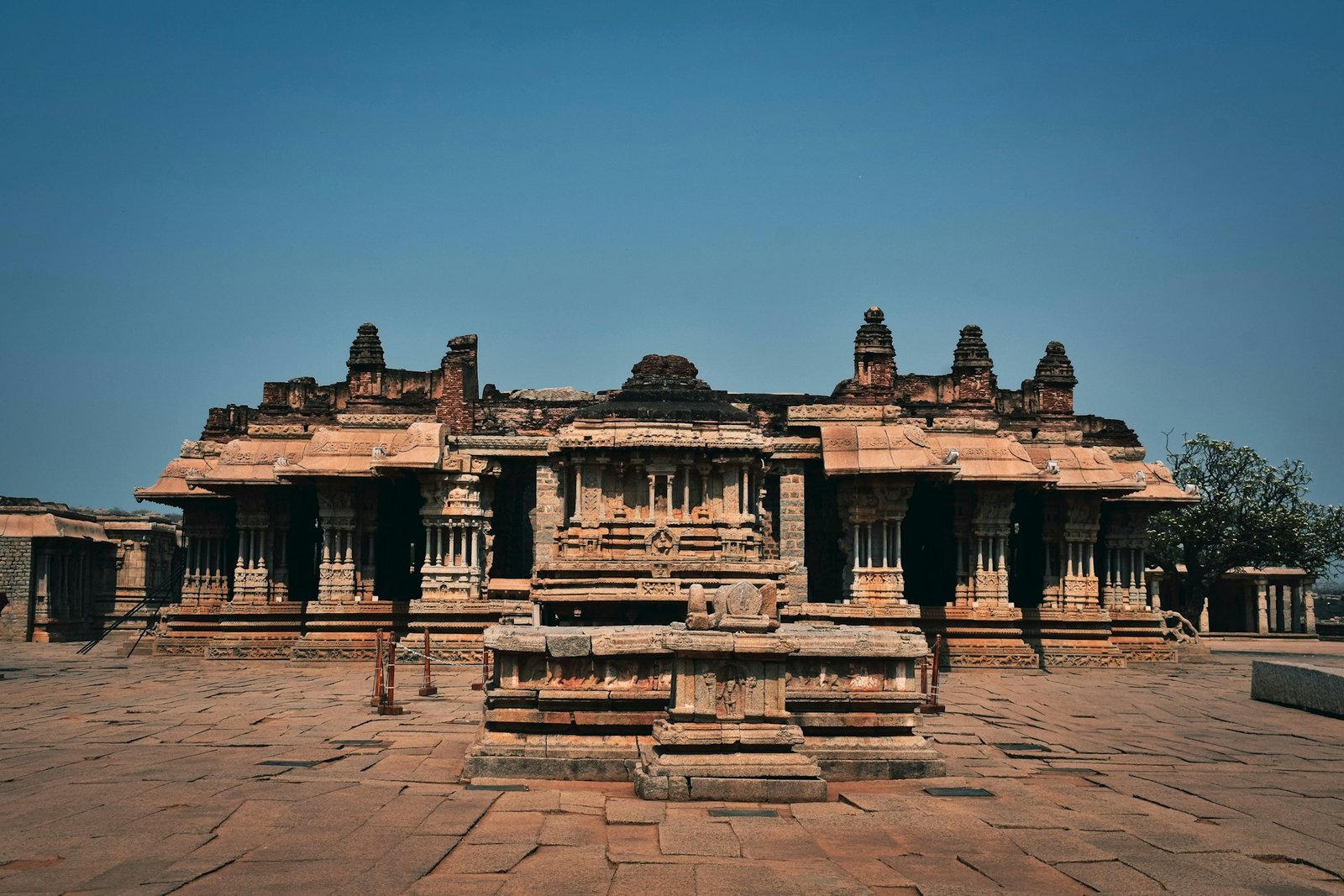
Hampi is unusual among great archaeological sites because its destruction has a date.
Vijayanagara was the capital of the last great Hindu empire of southern India, founded in 1336 by the brothers Harihara and Bukka. By the early sixteenth century it had grown into one of the largest and wealthiest cities in the world. In 1565, after the Battle of Talikota, it was sacked. It was never reoccupied. What stands today is roughly 1,600 surviving structures scattered across a boulder field on the banks of the Tungabhadra, inscribed by UNESCO in 1986.
Most ruins decline slowly. This one stopped.
The boulders are the point
The first thing that registers at Hampi is not a monument, it is the landscape. Granite boulders the size of houses are piled across the terrain in formations that look deliberate and are not. Vijayanagara’s builders did not clear them. They built with them, using boulders as walls, gateway anchors and temple platforms.
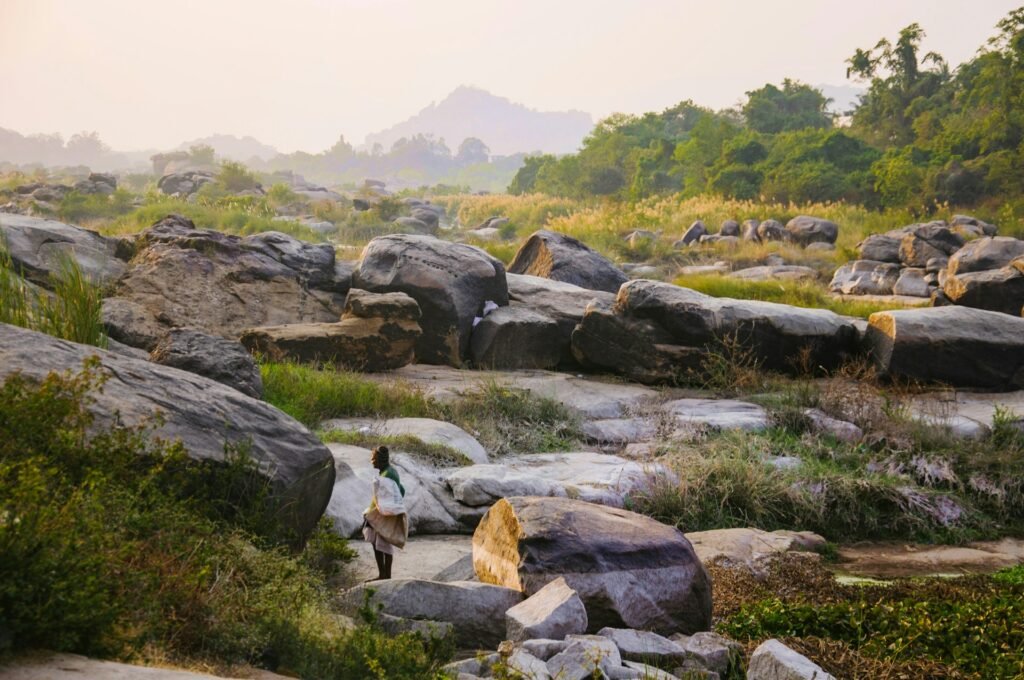
Understanding this makes the architecture legible. The city was not imposed on the site. It was grown into it.
What to prioritise
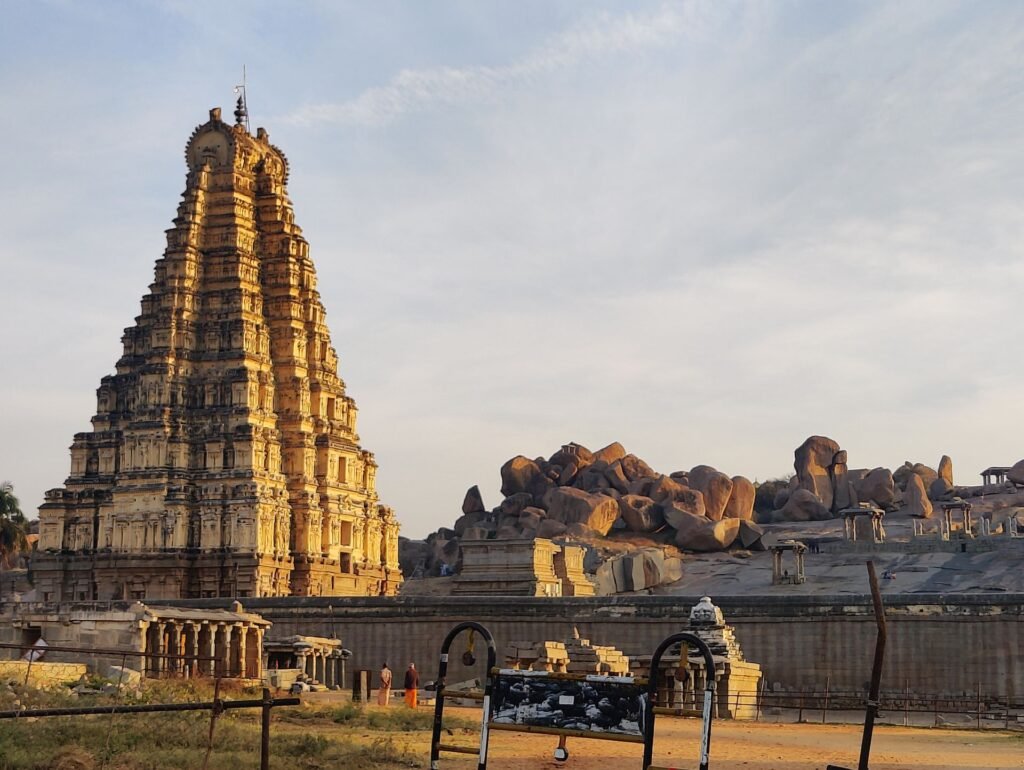
Virupaksha Temple. Dedicated to Shiva, with a history running back to around the seventh century, well before the empire existed. It is the oldest structure in the sacred zone, and crucially it never stopped functioning. Daily worship has continued through the rise of Vijayanagara, the catastrophe of 1565, and the centuries of silence after. You are not visiting a monument here, you are visiting a working temple.
Vittala Temple complex. The high point of Vijayanagara craftsmanship. The stone chariot in the courtyard, actually a shrine to Garuda carved to resemble a temple car, is the image on most Karnataka tourism material and one of three famous stone chariots in India, alongside Konark and Mahabalipuram. It was commissioned in the sixteenth century under Krishnadevaraya. The complex also holds the saptasvara pillars, which ring at different pitches when struck.
Hazara Rama Temple. The royal family’s private chapel, its outer walls carrying continuous bas relief friezes of the Ramayana alongside processions of elephants, horses and soldiers.
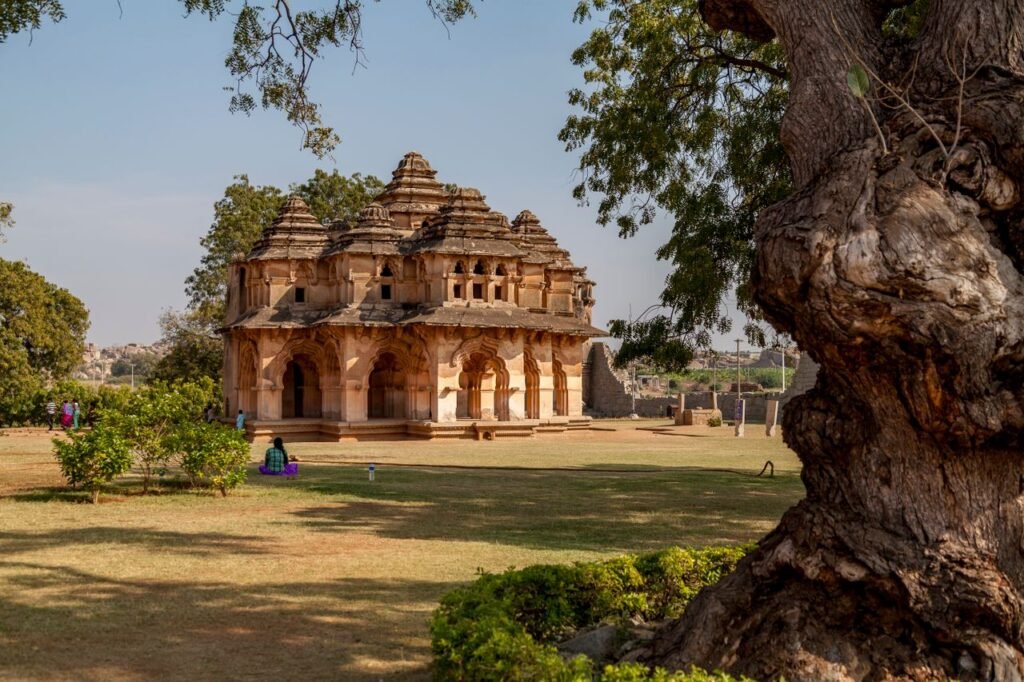
Lotus Mahal and the Elephant Stables. Both sit in the royal enclosure and both show the Hindu and Indo Islamic blend clearly, the Mahal in its lobed arches and pyramidal roofs, the stables in eleven domed chambers arranged in a single symmetrical range.
Practical shape of a visit
The site spreads across a wide area covering multiple villages and two districts. Walking the whole thing is not realistic. Hire a bicycle or an auto for the day, and split the visit into the sacred zone on one day and the royal enclosure on another.
When to go: October to February. The heat outside that window is punishing across open stone.
Nearest railhead: Hosapete Junction, about 13 km away. Bengaluru is roughly 340 km, a six to seven hour drive.