
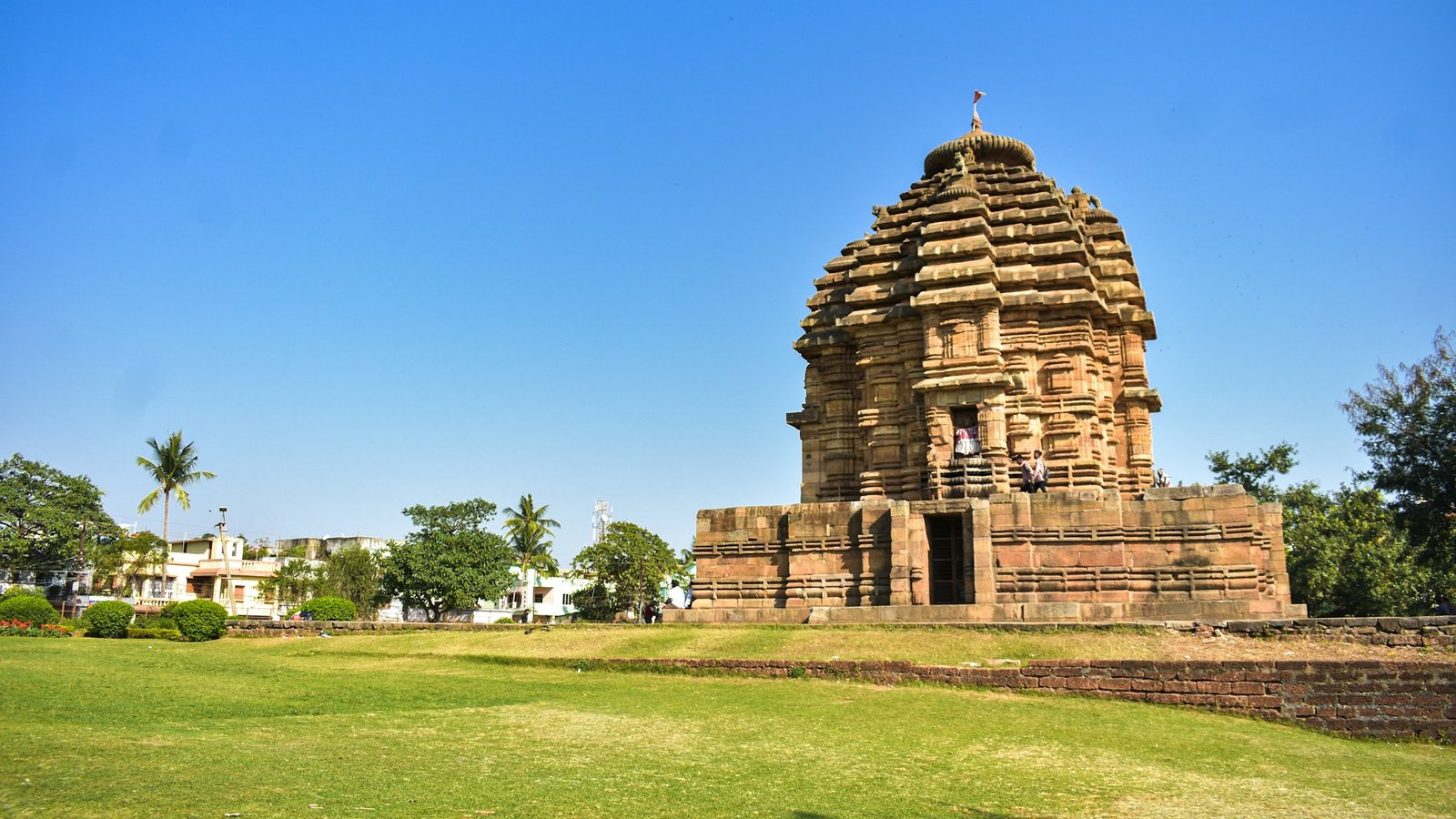
Odisha sits on the east coast of India between West Bengal and Andhra Pradesh, and it has been quietly holding one of the more remarkable concentrations of medieval architecture in the country for about a thousand years. It also has one of the least crowded coastlines in India, several protected tribal areas that are beginning to open carefully to visitors, and a wildlife corridor that runs from the hills to the mangroves without a break.
Almost nobody from outside the state goes there, which is the first thing to say about it.
Bhubaneswar and Puri
Bhubaneswar was once called the city of temples and the claim was not exaggerated. The Lingaraj temple complex, built in the eleventh century, is one of the finest examples of Kalinga architecture anywhere and considerably less visited than it deserves. The Archaeological Survey lists over five hundred temples in the city, of which a handful are still in active worship.
Puri holds the Jagannath temple, one of the four Char Dham sites in India and the origin of the word juggernaut, via the Portuguese and then the English. Non Hindus cannot enter the main temple but can see it from a rooftop on the road opposite. The Rath Yatra, when the three main deities are taken through the city on enormous wooden chariots, is among the largest religious gatherings in the world.
Konark
The Sun Temple at Konark, built in the thirteenth century by the Ganga king Narasimhadeva I, is designed as a colossal stone chariot with twenty four wheels and seven horses. It is a UNESCO World Heritage Site and one of the three or four most extraordinary pieces of medieval architecture in India. The erotic carvings on the outer walls are the most discussed feature and not the most impressive one.
The twenty four wheels of the chariot are accurate sundials. Each is about three metres in diameter, with eight broader spokes that cast shadows precisely enough to read the time of day. They still work.
The coast and the wildlife
Chilika Lake, south of Puri, is the largest brackish water lagoon in Asia, designated as India’s first Ramsar wetland in 1981. In winter it hosts over a million migratory birds from Central Asia, Siberia and Kazakhstan, including flamingos, pelicans and storks. The Irrawaddy dolphin, endangered globally, finds its single largest habitat here with around a hundred and fifty individuals recorded in recent surveys.
Bhitarkanika in the north is a mangrove sanctuary with the second largest population of saltwater crocodiles in India. Odisha’s beaches at Chandipur, Gopalpur and Pati Sonepur are clean, uncrowded and entirely different in character from Goa or Kerala.
What nobody tells you
Non Hindus cannot enter the Jagannath temple or the Lingaraj complex. This is enforced and worth knowing before planning the visit around them.
October to March is the sensible window. Odisha’s summer is severe and the coast is cyclone prone in October, though the western disturbance that brings cyclones usually misses the temple belt inland.
Bhubaneswar has an airport with connections from most major cities. The coast and the temples form a compact triangle that works well as a four to five day circuit.c